Reformer Pilates benefits: why it works so well
Discover the reformer Pilates benefits for core strength, posture and flexibility, who it suits and how often to train. See what a class can do for you.

The main reformer Pilates benefits are deep core and postural strength, better flexibility with stability, a joint-friendly low-impact workout, and easier, more controlled movement in everyday life. Many people expect reformer Pilates to be gentle and easy, then leave their first class feeling muscles they didn’t know they had. That is a good sign: the reformer works your body in a smarter, more complete way than most gym routines, and it can be adjusted for almost anyone.
What is reformer Pilates?
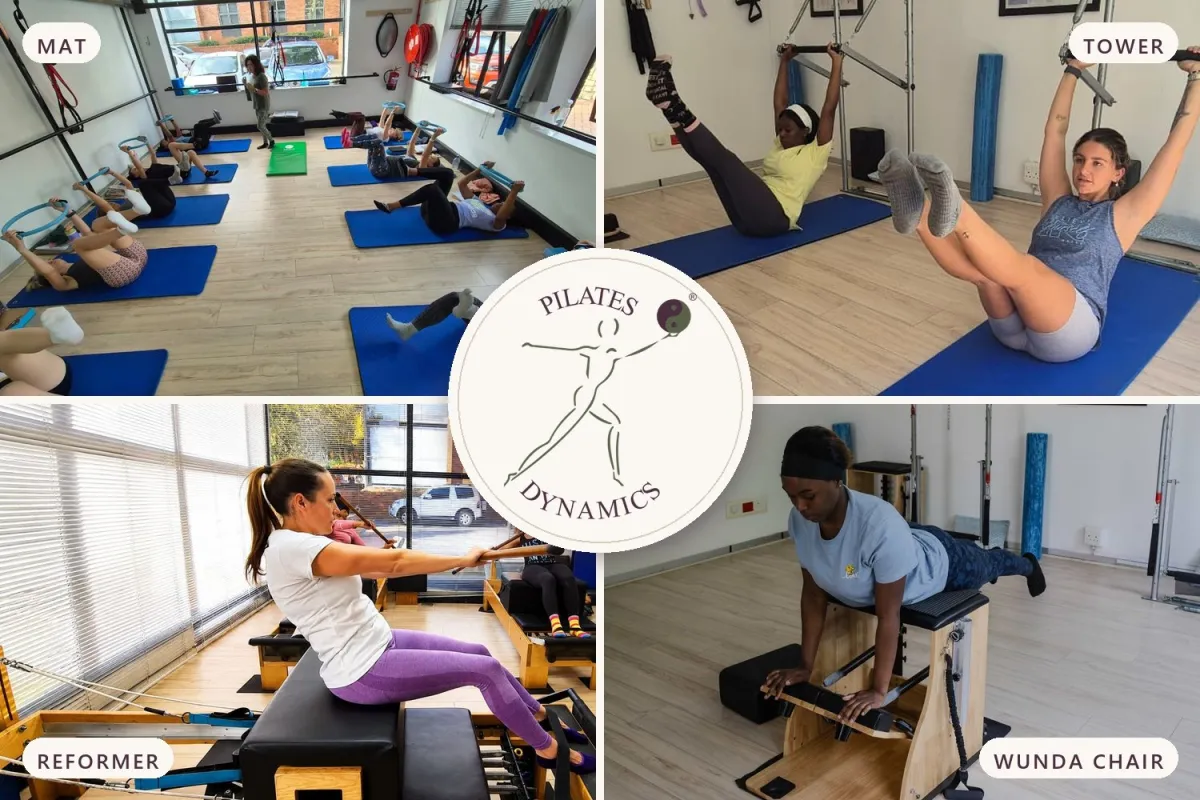
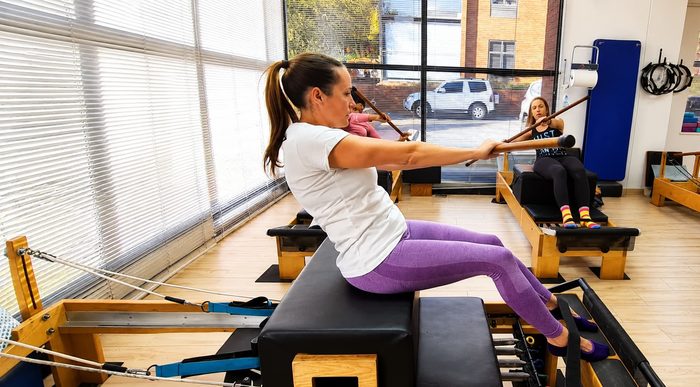
The reformer is a Pilates machine with a sliding carriage, a footbar, straps and a set of springs. The springs provide resistance, and the carriage moves with you, so your muscles have to work both when you push away and when you control the return. It can look intimidating the first time you see one, but once you’re on it most people find it surprisingly comfortable and supportive.
The key thing to understand is that reformer work is not about rushing or pushing through pain. It is about balance, control and alignment, which is exactly why it is so effective. If you’d like to know more about the machine itself and how it compares to working on the floor, read our guide to reformer vs mat Pilates.
The main reformer Pilates benefits
Deeper core and postural strength
You get stronger, and not only in the muscles you can see. Reformer exercises target the deep stabilising muscles that support your spine, hips and pelvis. Your core is working throughout the class, even in movements that don’t feel especially intense, because the moving carriage asks you to stay steady and controlled.
Better posture without forcing it
As your body becomes stronger and more balanced, many clients find they naturally sit, stand and move better. Less slouching usually means less tension through the neck, shoulders and lower back. Posture improves because the supporting muscles are doing their job, not because you are constantly reminding yourself to sit up straight.
Flexibility with stability
Pilates strengthens muscles through their full range of movement. Instead of feeling tight or stiff, you start to feel more open and supported. This combination matters: flexibility without strength can leave joints unstable, while strength without mobility can leave you rigid. The reformer trains both at once.
Low impact, but not low effort
Because the reformer supports your body, it is gentle on your joints. There is no jumping or pounding, which makes it a good option for beginners, people returning to exercise and anyone who finds high-impact training uncomfortable. Don’t underestimate it, though: with the right spring setting a single exercise can be very challenging.
Better movement in daily life
Pilates teaches you to move with control and good alignment. Over time this carries into everyday tasks such as lifting shopping, gardening, picking up children or sitting at a desk for long hours. Many clients tell us this is the benefit they value most.
Is reformer Pilates only for fit people?
Definitely not. Reformer Pilates is one of the most adaptable forms of exercise. The springs can be made lighter or heavier, exercises can be modified, and progressions are only added when you are ready. It works well for:
- beginners who have never done Pilates before
- desk workers with stiff backs, necks and shoulders
- athletes and runners looking to move and perform better
- people recovering from injury, with guidance from their doctor or physio
- anyone who simply wants to move more comfortably every day
At Pilates Dynamics our reformer classes run in small groups, so your instructor isn’t trying to watch too many people at once and can give each person proper attention and corrections. New clients start with a beginner assessment, which includes a posture analysis and an orientation, so you know what to expect before you join a class.
How often should you do reformer Pilates?
Consistency matters more than intensity. Two to three sessions a week is ideal, but even twice a week can bring noticeable changes if you stick with it. Mixing reformer and mat classes is a great way to keep your training balanced, and our beginner’s view of reformer Pilates describes what those first weeks can feel like.
Don’t worry if progress feels slow at first. Pilates works quietly in the background: after a few weeks of regular classes, many people notice that everyday aches have eased and they are standing taller without thinking about it.
Frequently asked questions
Is reformer Pilates hard for beginners?
It can be challenging, but it is designed to be scaled. Your instructor will set the springs and choose exercises to suit your level, and you progress as your strength and control improve.
How long is a reformer class?
All our adult classes are 55 minutes, which is enough time for a full-body workout with a proper warm-up and cool-down.
Will I see results from reformer Pilates?
With regular classes, most people feel stronger and more aware of their posture within the first few weeks. Visible changes take longer and depend on how often you train and your overall lifestyle.
Start your reformer Pilates journey
The hardest part is usually just showing up for the first class. Book your beginner assessment, see current class options on our pricing page, or call the studio on 011 792 5459, WhatsApp 072 999 2229 or email info@pilatesdynamics.co.za. You’ll find us at Stonemill Office Park, 300 Acacia Road, Darrenwood, Randburg.