Pilates academy in Johannesburg: why study with Pilates Dynamics
Choosing a Pilates academy in Johannesburg? See how we teach, our six accredited courses and their hours, and what to look for. Find your course.

Pilates Dynamics is a Pilates academy in Johannesburg that has been training instructors from its Randburg studio since 2007. We offer six accredited teacher training courses, from an 85-hour Mat & Small Equipment course to a 315-hour Comprehensive qualification, taught in small groups or privately by instructors who work in a busy studio every day. If you are deciding where to study, this guide explains how we teach, what you will learn and what to look for in any Pilates academy in Johannesburg.
Why study at a Pilates academy rather than a short course
Joseph Pilates believed physical and mental health are closely connected. His method asks you to stay aware of your breathing and how your body moves, building core strength and a balance between strength and flexibility while correcting the muscle imbalances that daily habits and sport create. Teaching that well takes more than a weekend.
Pilates is not regulated by law in South Africa, so anyone can call themselves an instructor and course quality varies widely. Be wary of courses that promise a qualification in a few days or weeks. Many people who take that route end up retraining elsewhere because they don’t feel ready to teach. As a rule, the more practical hours a course requires, the better prepared you will be.
What makes our Pilates academy in Johannesburg different
We teach understanding, not just repertoire
Every exercise is taught with its goal, the muscles it targets, who it suits and who should avoid it. Applied anatomy runs through the whole course, so you understand why an exercise works and how to change it for the person in front of you.
Hands-on teaching
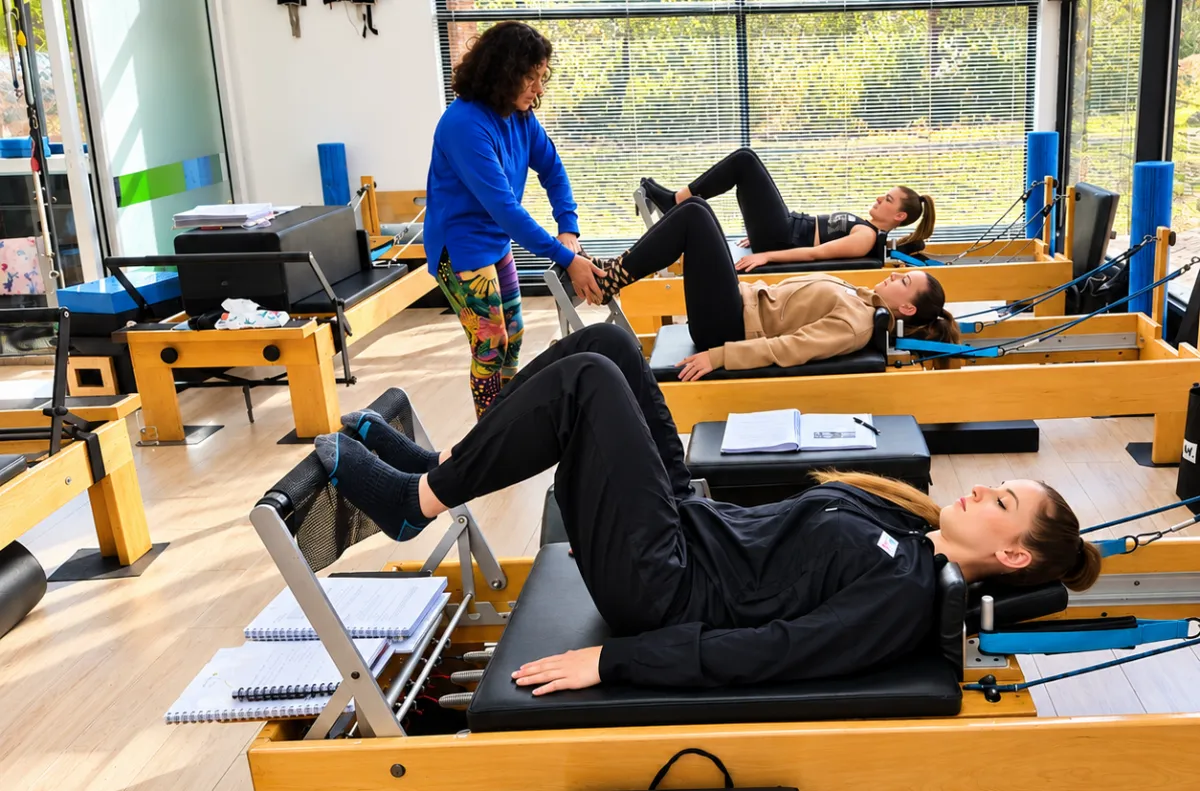
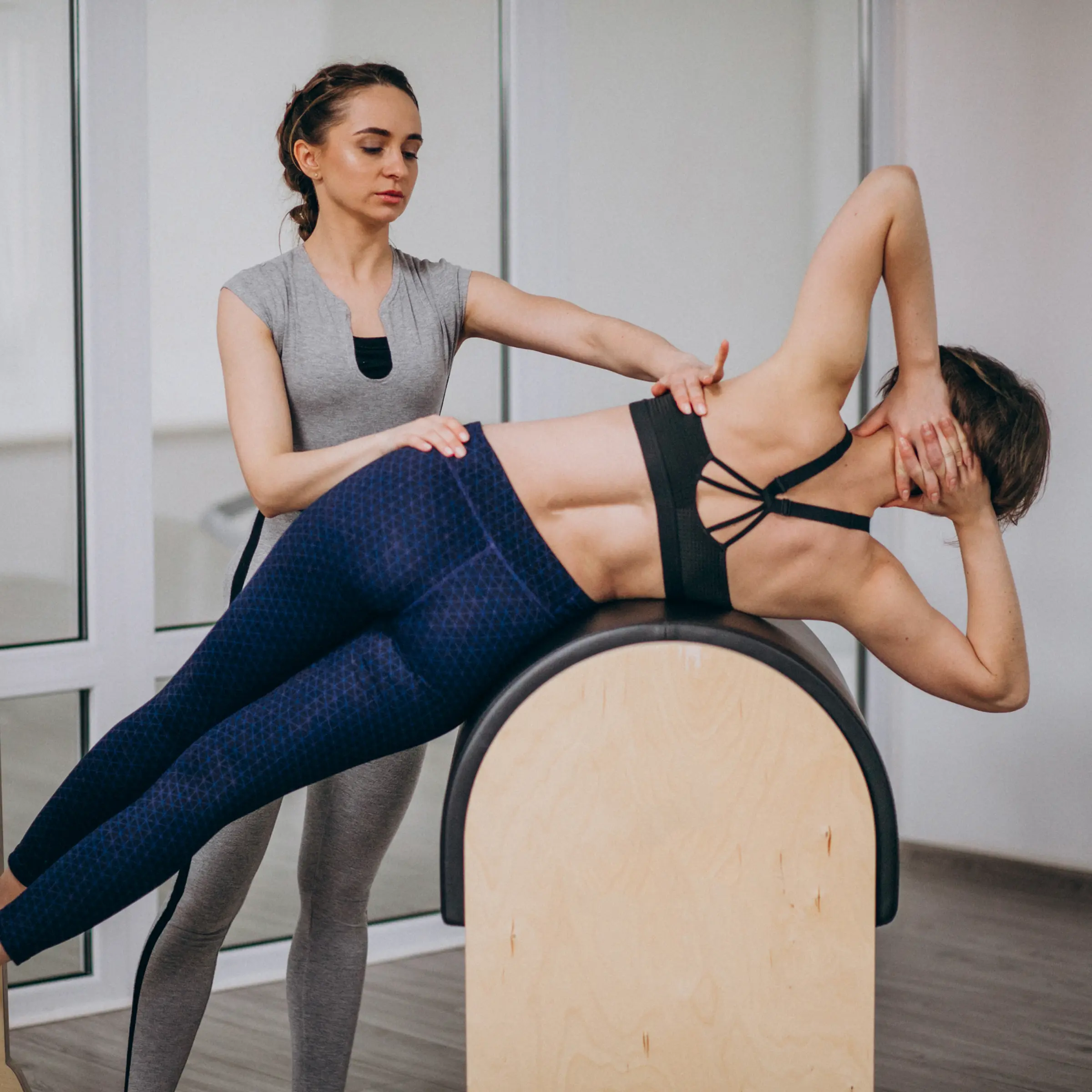
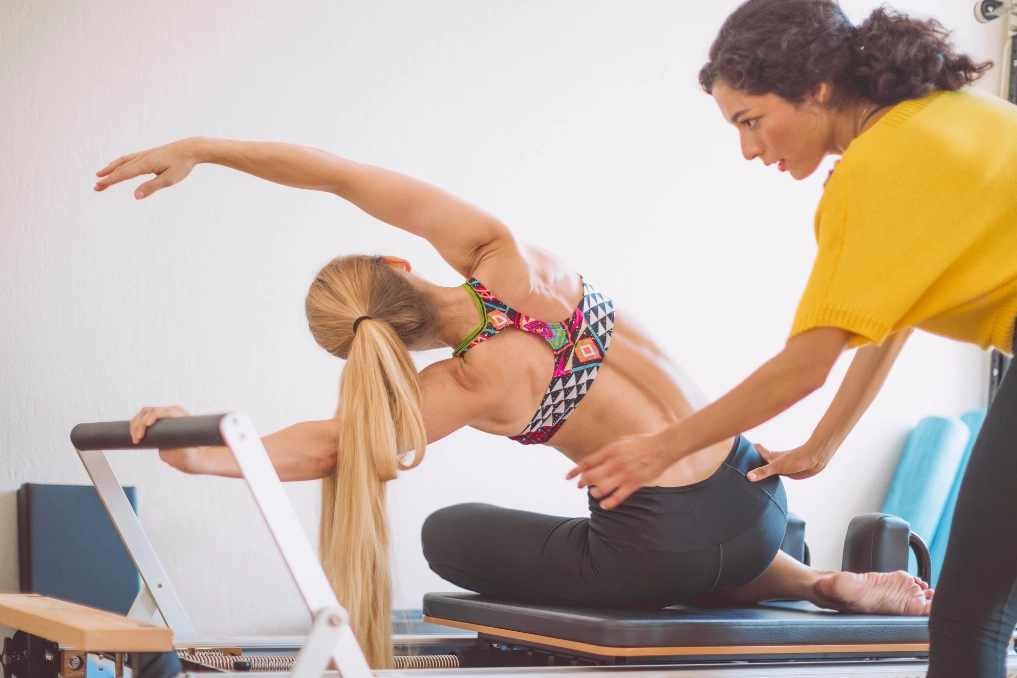
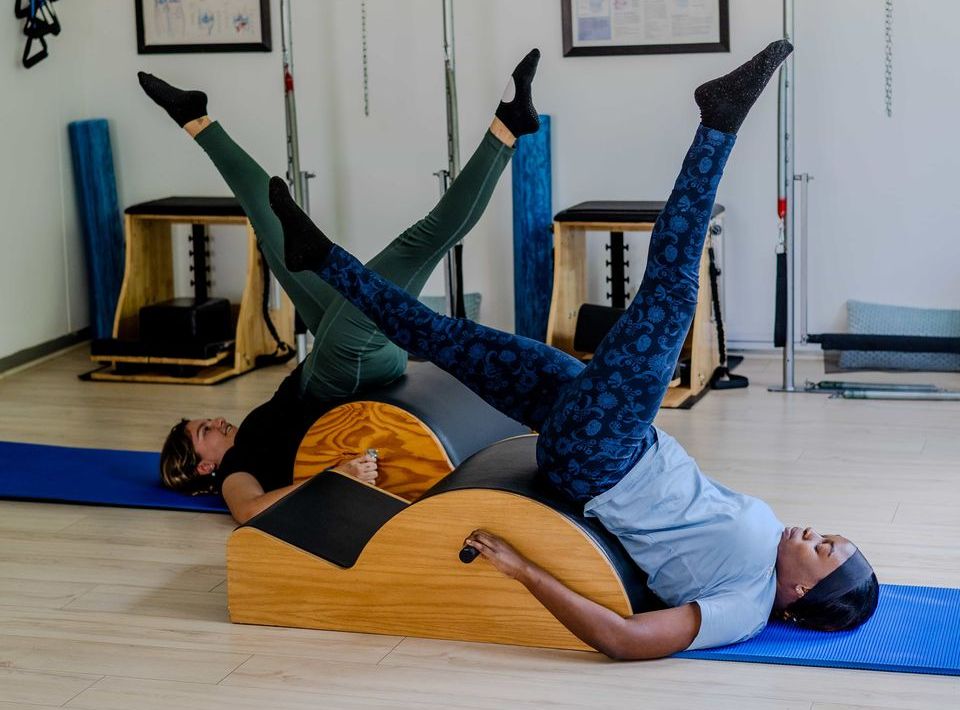
Pilates is a hands-on method. You need to see, touch and correct real bodies. Our lectures run in small groups of 4 to 10, or privately, and you complete observation and supervised teaching as part of your practical hours. Online tuition for lectures is possible, but the practical side keeps you connected to real clients.
Props and modifications throughout
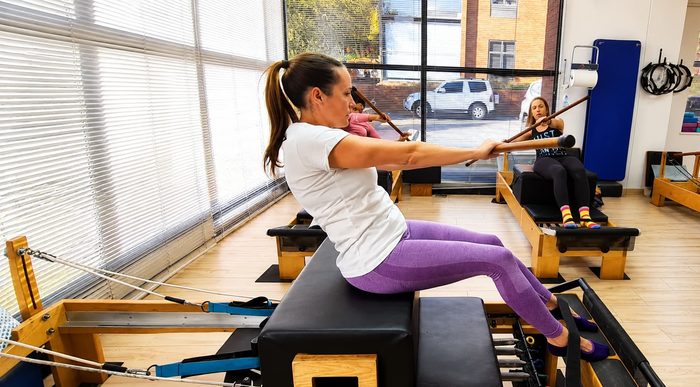
Small equipment and props are built into the repertoire from the start, so you learn how to make an exercise easier, harder or better aligned.
Injuries, pathologies and special populations
Common injuries, postural problems, pregnancy and older clients are covered within the exercise work, not as an afterthought.
Experienced lecturers
Training is led by Andriesa Verloop, Director and Lead Instructor, who has taught and trained instructors for many years and has studied a range of Pilates styles.
Our courses and their hours
How long it takes to qualify depends on how much time you can give to your practical hours each week. These are the course hours:
- Mat & Small Equipment (85 hours): the foundation course and the prerequisite for reformer training.
- Intensive Reformer (70 hours): for students who already hold a mat qualification.
- Mat & Intensive Reformer combo (155 hours): mat and reformer together in one programme.
- Comprehensive Conversion (230 hours): all the large apparatus, for qualified mat teachers.
- Comprehensive (315 hours): mat, small equipment and all the large apparatus.
- Wunda Chair (45 hours): a focused course on the chair.
Our courses earn CPD points with REPSSA, CEUs with SASP and CPD points with BASA. Exams run three times a year, in March, July and October, and the pass mark is 70%.
What you can do with your qualification
Earning as an instructor
Your income depends on how many hours you teach, whether you work in groups or privately, and which equipment you are qualified on. Properly qualified instructors are in demand, and instructors who can teach reformer and the other apparatus have the widest choice of work. Our post on building a Pilates career explains the different ways instructors work and earn.
Working anywhere in the world
Wherever you apply, you will usually be asked to teach a sample session, and your knowledge decides whether you get the job. Our graduates teach in studios in South Africa and abroad, and some have opened their own studios.
Is teaching Pilates right for you?
If you love movement, want to help people, prefer a flexible schedule to an office routine, and enjoy learning, it could be a good fit. Read our reasons to become a Pilates instructor for more.
Frequently asked questions
Can I visit before I sign up?
Yes. Contact us to arrange a visit to the studio and a chat with one of our lecturers about which course suits you.
Do you offer training outside Johannesburg?
Courses also run in Cape Town, with dates available on request.
Where do I find current fees and dates?
Everything is in the info pack on our teacher training page, along with payment plan options.
How to register
- Compare the teacher training courses.
- Download the info pack for current dates, fees and payment plans.
- Complete the online registration form.
Questions first? Send an enquiry, email info@pilatesdynamics.co.za or call 011 792 5459.