Pilates for scoliosis in Randburg, Johannesburg
How Pilates for scoliosis can support strength, posture and comfort, which exercises are used, and how to start safely with us. Read before you book.

Pilates for scoliosis can be a helpful, gentle way to strengthen the muscles that support your spine, improve posture and body awareness, and ease some of the tension and discomfort that often come with a sideways curve. It is not a cure, and it won’t straighten a spine on its own, but many people with scoliosis find that regular, well-supervised Pilates helps them move more comfortably. Before you start, check with your doctor or physiotherapist, and let your instructor know about your diagnosis so your programme can be adapted. At Pilates Dynamics in Randburg, our biokineticist, Aurelie, can help put together a suitable approach.
What is scoliosis?
Scoliosis is a sideways curvature of the spine, usually in a C or S shape, often with some rotation of the vertebrae. The name comes from the Greek word skolios, meaning “bent” or “crooked”. Because the spine is curved and rotated, the muscles on either side of the trunk tend to work unevenly. Some become tight and overworked while others weaken, which can lead to imbalance, discomfort and tension in the back, shoulders and hips.
Types and causes of scoliosis
There are several types of scoliosis, and the degree of curvature varies widely. The most common type is idiopathic scoliosis, which means there is no single known cause. Other types can be linked to:
- neuromuscular conditions such as cerebral palsy or muscular dystrophy
- differences in how the bones of the spine developed before birth (congenital scoliosis)
- previous surgery on the chest wall in infancy
- injuries to, or infections of, the spine
- abnormalities of the spinal cord
Your doctor or specialist is the right person to diagnose the type and severity of your scoliosis and advise on treatment. Pilates sits alongside that care, not in place of it.
How Pilates for scoliosis can help
Pilates focuses on alignment, controlled movement, breathing and balanced strength, which is why it is often recommended as a supportive form of exercise for people with scoliosis. Depending on your curve and your doctor’s advice, regular sessions can help to:
- Strengthen the core and back muscles that support the spine, which many people find reduces fatigue and discomfort.
- Improve posture and body awareness, so you notice and adjust how you sit, stand and move during the day.
- Balance the two sides of the body by strengthening weaker muscles and gently releasing tight ones.
- Improve trunk mobility and flexibility through segmental movements of the spine, where appropriate.
- Ease tension and stress through controlled breathing and mindful movement.
Everyone’s scoliosis is different, so a one-size-fits-all class is not ideal. Exercises that suit one curve may not suit another, which is why small groups, private classes and professional guidance matter.
Pilates exercises often used for scoliosis
These are some of the exercises an instructor may include, adapted to your curve and comfort. Please don’t try new exercises on your own without guidance if you have a diagnosed condition.
- Posture awareness. Learning what good alignment feels like for your body, and practising it during movement, is a cornerstone of Pilates.
- Pelvic tilts. Gently mobilise the lower back and hips and teach you to find a neutral pelvis.
- Pelvic curls. Roll the spine up and down one segment at a time to release tension and improve spinal mobility.
- Cat stretch. On hands and knees, alternately round and lengthen the spine to keep it mobile.
- Quadruped (bird dog). Extend the opposite arm and leg to strengthen the back and build stability around the pelvis and lower back.
- Toe taps. Lying on your back, lower one foot at a time to strengthen the deep abdominals while keeping the pelvis steady.
- Swimming. Lying face down, lift opposite arms and legs to strengthen the back extensors.
With consistent practice, many people notice better posture, less tension and more ease of movement. For a realistic idea of how long posture changes can take, read our article on how long it takes to correct posture with Pilates.
Pilates classes for scoliosis in Randburg
At Pilates Dynamics we have been teaching Pilates in Randburg, Johannesburg, for 19 years, and all our instructors are fully qualified. If you have scoliosis, we recommend you:
- Speak to your doctor or physiotherapist about whether Pilates is suitable for you and anything you should avoid.
- Book a beginner assessment, which includes a posture analysis, and tell us about your diagnosis.
- Consider starting with private classes, or sessions with Aurelie, our biokineticist, before moving into a small group class.
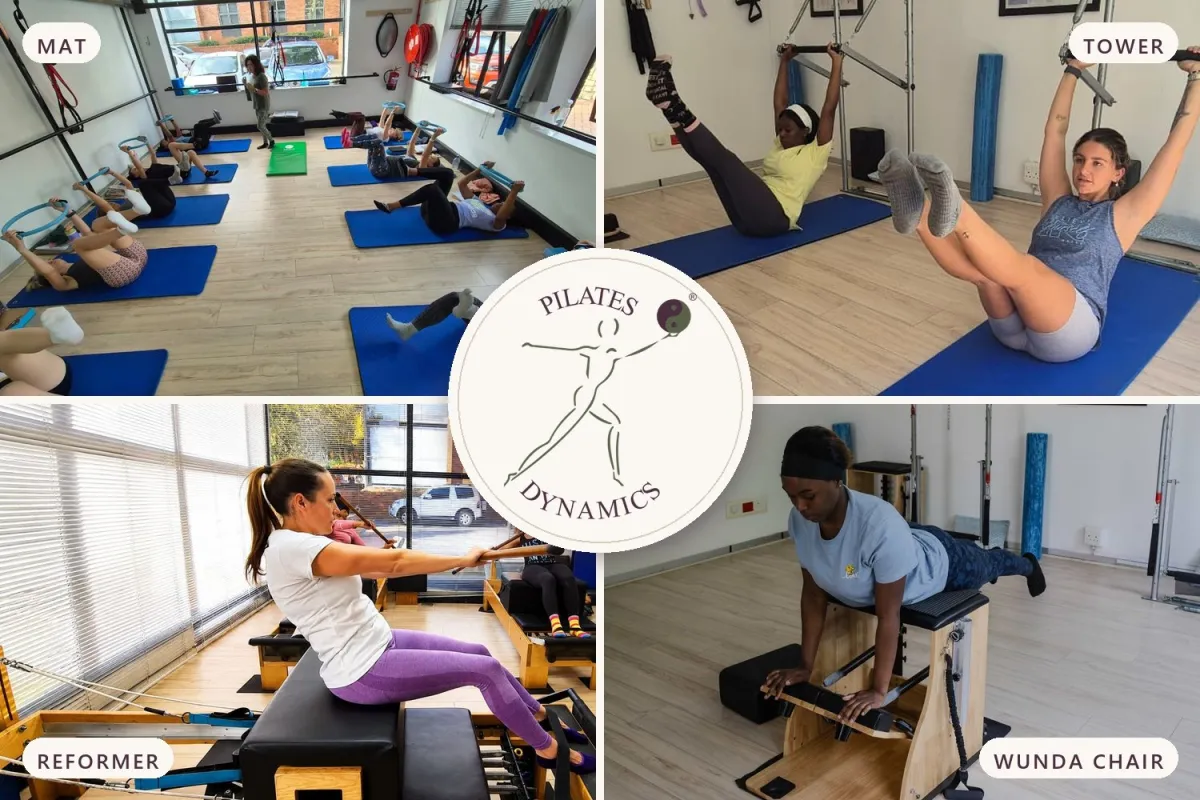
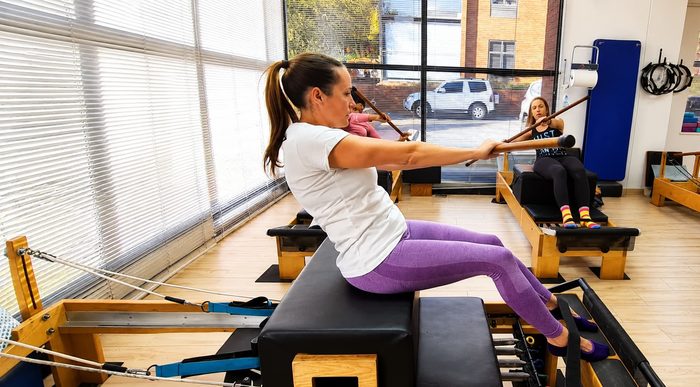
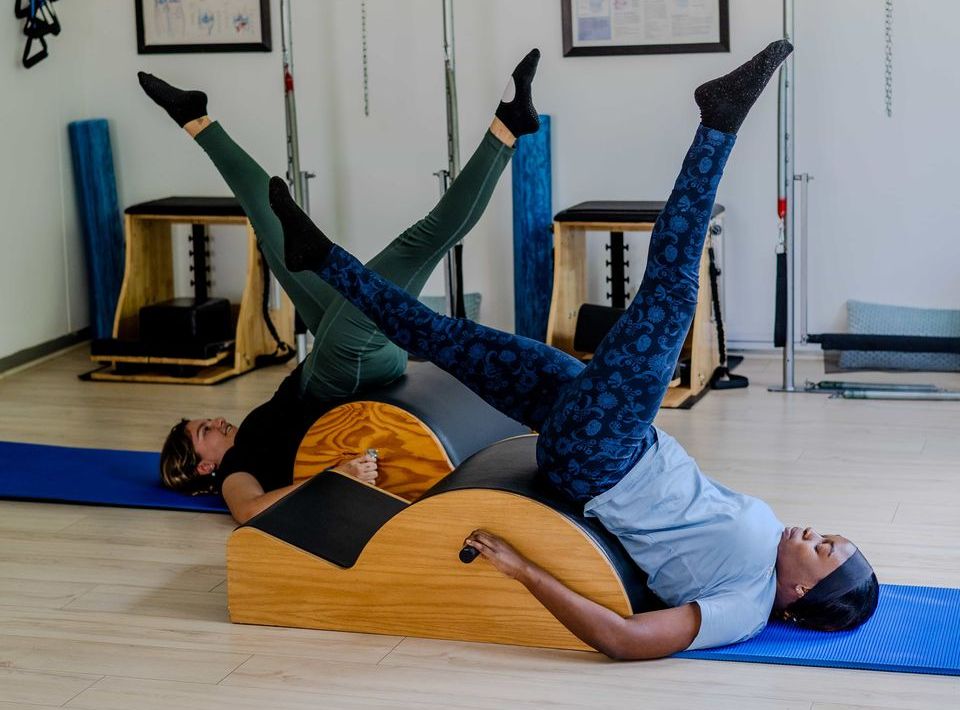
Our small classes on the mat, reformer, tower and Wunda chair give instructors the time to adapt exercises for you.
Frequently asked questions
Can Pilates cure scoliosis?
No. Pilates cannot cure scoliosis, but many people find it helps with strength, posture, comfort and body awareness as part of the care their doctor recommends.
Is reformer Pilates safe with scoliosis?
For many people it is, because the reformer supports the body and the resistance can be adjusted. Check with your doctor or physio first, and make sure your instructor knows about your curve.
Can children with scoliosis do Pilates?
Often, yes, with their doctor’s approval. Speak to us about the best option for your child.
Get started
To find out whether our classes suit you, book a beginner assessment, see current class options on our pricing page, or contact us on 011 792 5459, WhatsApp 072 999 2229 or info@pilatesdynamics.co.za.