Pilates for toning: building muscle definition and shape
Pilates for toning builds lean, defined muscle and a stronger core. Learn how it works, mat vs equipment, and how often to train for visible results.

Yes, Pilates for toning works well, because every class strengthens your muscles against resistance while keeping them long and mobile. Pilates conditions the deep supporting muscles that hold your posture as well as the larger muscles of the legs, glutes, arms and back, so over time your body looks firmer and more defined and you carry yourself taller. Toning is mostly about building and keeping lean muscle, and that is exactly what consistent, well-taught Pilates does. If your main goal is losing weight rather than shaping and strengthening, read our separate guide to Pilates for weight loss.
How Pilates tones your muscles
“Toned” usually means muscles that are firm and visible rather than soft. You get there by building muscle strength and endurance, and Pilates does that in a few ways:
- Resistance: your own body weight, plus springs on the reformer, tower and Wunda chair, and small equipment like bands, rings and weights.
- Control: slow, precise movements keep the muscles working through the whole range, not just at the easy point.
- Deep core work: the muscles around the spine, pelvis and waist are engaged in almost every exercise, which helps the waistline and posture.
- Balance between muscle groups: Pilates strengthens the muscles that everyday life and many sports neglect, so the body develops evenly.
Because Pilates is a full-body method, you do not tone one area in isolation. Your posture improves, your core gets stronger, and the whole body tends to look more balanced.
Toning versus weight loss: muscle, fat and the scale
Many people who say they want to lose weight actually want to change their shape: firmer, leaner and stronger, not simply lighter. If you were the same weight but stronger and more toned, would you still want the scale to drop? Most people would not.
You may have heard that muscle weighs more than fat. A kilogram of muscle and a kilogram of fat weigh the same; the difference is density. A kilogram of marshmallows takes up far more space than a kilogram of steel. In the same way, two people of the same weight can look very different if one carries more muscle and the other more fat. Muscle looks firm and sculpted; the same amount of extra fat looks softer.
That is why Pilates for toning focuses on building lean muscle rather than chasing a number on the scale. For calorie burn, cardio options and weight management, see our weight-loss post.
Mat or equipment Pilates: which is better for toning?
A common misconception is that only the big machines change your body. In practice, both mat and equipment Pilates build muscle definition, and combining the two gives the best results.
Mat and small equipment classes
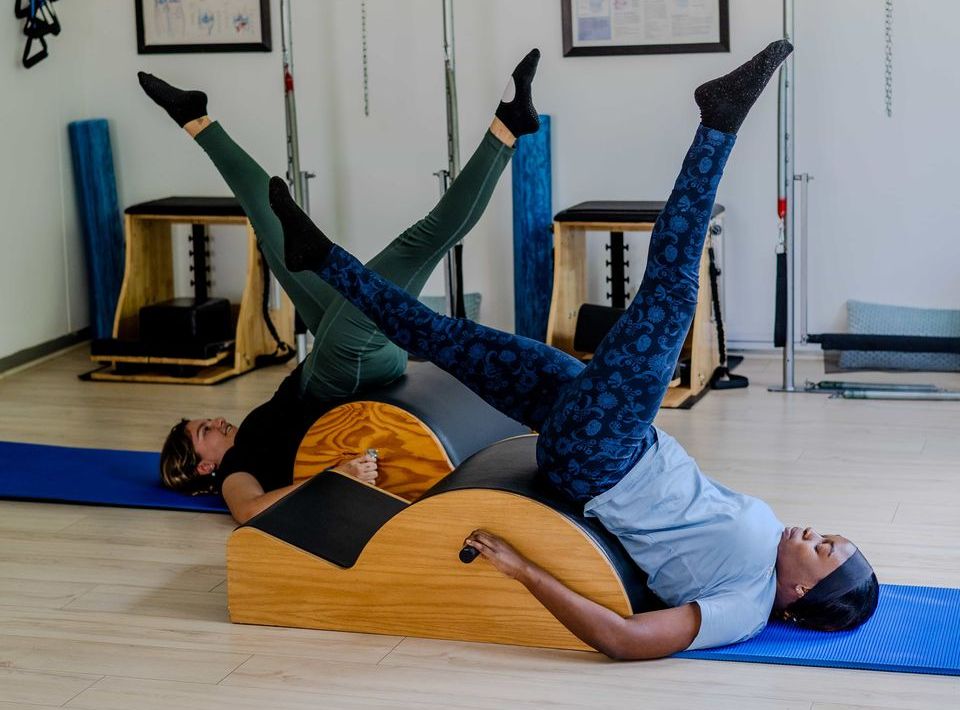
Mat classes use your body weight plus props that add challenge or support, such as the TRX, Bosu, wobble boards, air cushions, free weights, toning bars, rebounders, foam rollers, weighted balls and magic rings. With consistent practice, mat work builds a strong core and abdominal muscles.
Reformer, tower and Wunda chair classes
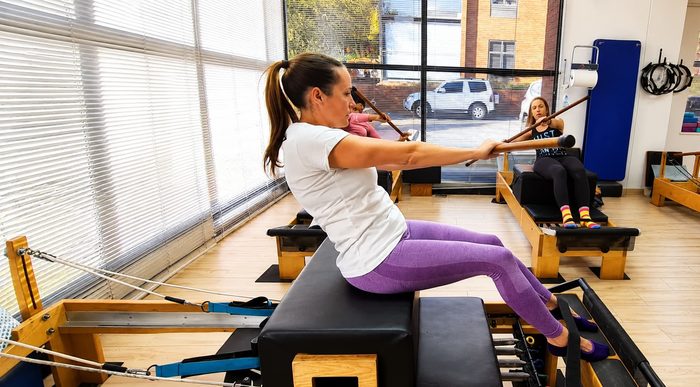
The large machines use springs to add adjustable resistance, so your instructor can increase the load as you get stronger. They are especially good for legs, glutes, back and arms, and the reformer’s jump board adds low-impact cardio.
Why variety helps
Mixing class types works your muscles in different ways and keeps you interested, and staying interested is what keeps you consistent. At Pilates Dynamics, classes change regularly and use a wide range of equipment, so you are unlikely to get bored.
How often should you do Pilates for toning?
Two or three Pilates sessions a week is a good starting point for seeing results. As with any training, consistency matters more than intensity. If you can add a session, do, and try to combine a mat class with an equipment class during the week. For more on frequency, read how often you should do Pilates.
What you eat also plays a part. A balanced diet with sensible portions supports the work you do in class and helps the muscle definition show.
Frequently asked questions
Can you get toned abs from Pilates?
Pilates strengthens the whole abdominal wall, including the deep transverse abdominis and the obliques around the waist, and many clients notice a flatter, firmer midsection and better posture. How visible your abdominal muscles become also depends on body fat, which is influenced by diet and overall activity, so be patient and realistic. A strong core is worth having either way: it supports your back and makes everyday movement easier.
Will Pilates make me bulky?
Pilates builds strength and endurance with controlled resistance rather than very heavy loads, so most people find it creates a firm, lean look rather than bulk.
How long before I see toning results?
It varies with your starting point, how often you train and your diet. Many clients feel stronger and stand taller before they see changes in the mirror. Regular attendance is the key.
Is Pilates for toning suitable for beginners?
Yes. Every exercise can be modified, and new clients start with a beginner assessment so they join the right level. If you have an injury or medical condition, check with your doctor or physio first; our biokineticist, Aurelie, can help tailor your programme.
Start toning with Pilates Dynamics
Begin with a beginner assessment, then choose a monthly subscription from our class prices. Questions? Call 011 792 5459, WhatsApp 072 999 2229 or email info@pilatesdynamics.co.za.