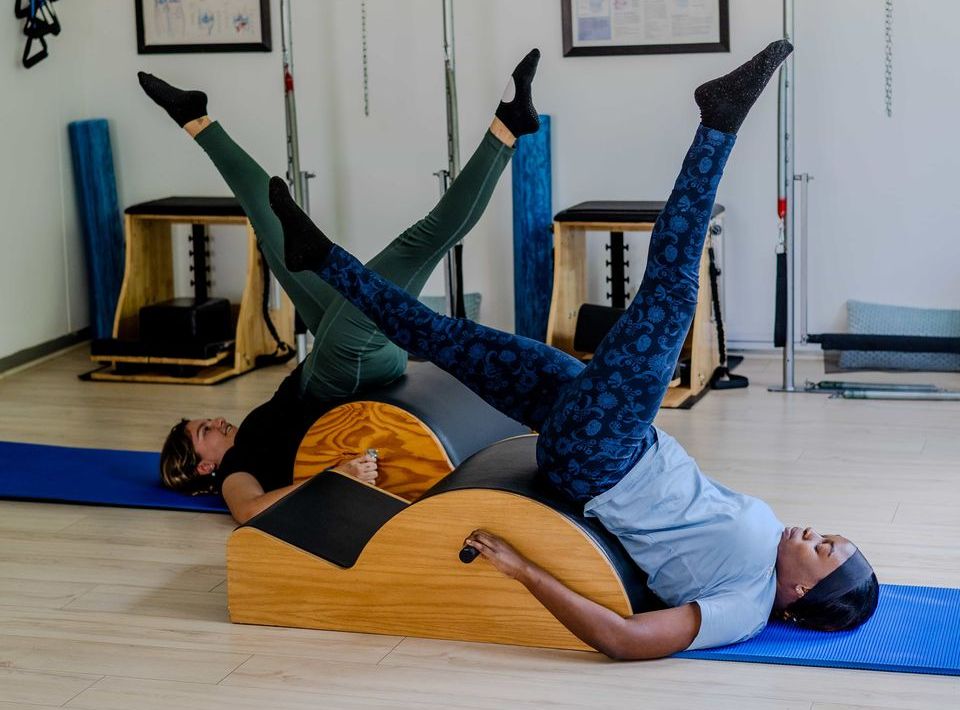
Rebounder Pilates: can it help you lose weight?
What rebounder Pilates is, what it can realistically do for fitness and weight loss, and how to bounce safely. Try it in a beginner class.

Yes, you can do Pilates on a rebounder, and it is a fun way to add cardio to your Pilates practice. Rebounder Pilates combines gentle bouncing on a mini trampoline with Pilates principles such as core control, alignment and breathing. It raises your heart rate without the pounding of running on hard ground, and it can play a useful part in weight loss when it is combined with regular exercise and sensible eating. Here is how it works, what it can and can’t do, and how to try it safely.
What is rebounder Pilates?
A rebounder is a small, round trampoline, usually about a metre across, with a sprung mat close to the floor. Rebounding means bouncing, stepping, jogging or jumping on it in a controlled way.
In a Pilates class, the rebounder is used as one piece of small equipment among many. Rather than bouncing freely, you apply the same principles you use on the mat:
- keeping your core engaged so your trunk stays stable as you move;
- holding good alignment through your feet, knees, hips and spine;
- controlling the landing rather than letting the trampoline throw you around;
- breathing steadily and rhythmically.
Short rebounding intervals can be mixed with standing balance work, arm exercises with light weights, and mat exercises in between. The result is a full-body class with a cardio element.
Benefits of rebounding in a Pilates class
Low-impact cardio
Because the sprung mat absorbs much of the landing, rebounding is gentler on your joints than running or jumping on a hard floor, while still getting your heart and lungs working. It is suitable for a wide range of ages and fitness levels, and the intensity is easy to adjust: a light bounce for beginners, faster or bigger movements for fitter clients.
Core strength and balance
The surface moves under you, so your body has to keep making small adjustments to stay upright. That constantly challenges your core, the small stabilising muscles around your ankles, knees and hips, and your balance. Many clients find this carries over into better control in their other Pilates exercises.
Variety and fun
Rebounding brings energy to a class. It is easy to learn, and most people find it enjoyable, which helps you keep coming back. Consistency matters more than anything else in getting results.
Can rebounder Pilates help you lose weight?
It can help, as part of a bigger picture. Weight loss comes down to regular movement, enough strength work to maintain muscle, good sleep and sensible eating over time. Pilates with a rebounder contributes to that in a few ways:
- the cardio intervals raise your heart rate and use energy;
- the Pilates exercises build strength and muscle tone;
- because it is low-impact and enjoyable, it is easier to keep doing week after week.
What rebounding can’t do is “spot reduce” fat from your tummy or thighs, or work miracles on its own. Be cautious of claims that a mini trampoline will detox your body or melt away cellulite. Those claims aren’t well supported. For a fuller picture, read our guide to Pilates for weight loss.
Is rebounding safe for everyone?
Rebounding is gentle compared with many forms of cardio, but it isn’t right for everyone at every stage. Check with your doctor or physiotherapist before you start if you:
- are pregnant or have recently given birth;
- have pelvic floor concerns or bladder leaking when you jump;
- have balance problems, dizziness or a heart condition;
- are recovering from an ankle, knee, hip or back injury.
Tell your instructor about any of these before class. They can offer gentler alternatives, such as marching or heel lifts without leaving the mat, or swap the rebounder for a different exercise. Our biokineticist, Aurelie, works with our instructors and can help where extra care is needed.
Tips for rebounding safely
- Start with small, controlled bounces, keeping your feet close to the mat.
- Keep your knees soft and aligned over your toes.
- Land through the whole foot rather than only on your toes.
- Stop if you feel dizzy, short of breath or any pain.
Frequently asked questions
Do I need my own rebounder?
No. We provide all the equipment in the studio.
Is rebounding a good workout for older adults?
Many older adults enjoy gentle rebounding because it is low-impact, but balance and joint health vary, so check with your doctor first and start slowly.
What should I wear?
Comfortable, fitted exercise clothing and socks. Anti-slip socks give the best grip.
Try rebounding at Pilates Dynamics
At our Randburg studio, rebounding is one of the small-equipment options built into our mat group classes, alongside free weights, barre work and other props. Our classes are kept small, so your instructor can watch your form and adjust exercises for you.
You don’t need any Pilates experience to join. Every new client starts with a private beginner assessment, during which your instructor checks your posture, teaches you the basics of breathing, muscle recruitment and alignment, and prepares you for group classes. If you need a few more private sessions before joining a group, that can be arranged. New to Pilates altogether? Our guide on Pilates for beginners is a good place to start.
Want to add some cardio to your Pilates? Book your beginner assessment, see the class timetable or check current fees on our pricing page. You can also email info@pilatesdynamics.co.za, call 011 792 5459, or call or WhatsApp 072 999 2229.