Teaching Pilates abroad: how the right qualification takes you further
Thinking about teaching Pilates abroad? See how one graduate went from office job to teaching overseas, and what to look for in a course.

If you love movement and dream of working in another country, teaching Pilates abroad is a realistic goal, provided you train properly first. Pilates is taught in studios, gyms and physiotherapy practices around the world, and a thorough qualification gives you skills that travel with you: a sound understanding of anatomy, a large exercise repertoire and the ability to teach any body that walks through the door. This post shares one graduate’s route from a nine-to-five job to teaching overseas, and explains what to look for in a course if you want the same options.
From client to instructor: one graduate’s story
One of our graduates started out as an ordinary client at our Randburg studio. She loved exercise and travel, but she had an office job that left little room for either. One day her class happened to follow a teacher training session, and she got chatting to the trainees. A few days later she had read the course information pack and enrolled.
She kept her full-time job while she studied and, once qualified, taught clients part-time at the studio. When her circumstances changed and she left that job, she began teaching online, and she has since relocated to Australia with her family, where she continues to teach. In her words, the course “opened bigger doors than I could have ever imagined”.
What makes a qualification useful for teaching Pilates abroad
Studios anywhere in the world want the same thing from an instructor: someone who can keep clients safe, adapt exercises for different bodies and explain clearly what to do. The things our graduate valued most are the things that make an instructor employable wherever they go.
Clear cueing
Many talented movers struggle to put an exercise into words. Our courses put a lot of emphasis on cueing, and that is the skill her clients now compliment most. If you are going to teach in a new country, often to people with a different first language, clear and simple cues matter even more.
Applied anatomy, injuries and pathologies
The courses teach applied anatomy throughout the repertoire: the muscle focus and objective of each exercise, and how common injuries and pathologies affect what you teach, with recommendations and contra-indications. This means you are prepared for different postures and movement restrictions rather than only for fit, injury-free clients.
Props and equipment
Small equipment and props are built into the repertoire, so you learn when, why and how to use them to make an exercise harder for a strong client or more supportive for a weaker one. Studios abroad vary in what they own, and knowing how to modify on the spot keeps you adaptable.
Learning how to teach, not only what to teach
You learn the reasons behind each exercise and the methodology behind the method. Before exams you are given the chance to teach some studio classes and receive feedback from the lecturers, which works like a mini-exam and builds real confidence.
How our teacher training courses support you
Pilates Dynamics has trained instructors in Johannesburg since 2007. The programme is led by Andriesa Verloop, our Director and Lead Instructor, an internationally qualified teacher and educator who has been exposed to many Pilates styles. Our lecturers also hold movement qualifications in addition to their Pilates training.
- A choice of courses: Mat and Small Equipment, Intensive Reformer, Wunda Chair, a Mat and Intensive Reformer combination, the full Comprehensive course, and a Comprehensive Conversion course for qualified mat teachers.
- Recognised training: our courses carry CPD points with REPSSA and BASA and CEUs with the South African Society of Physiotherapy (SASP).
- Small groups: training groups of four to ten, so you learn alongside peers who share your goals and support each other.
- Study from anywhere: course manuals plus an online library of exercise videos, and online tuition for the lectures is possible.
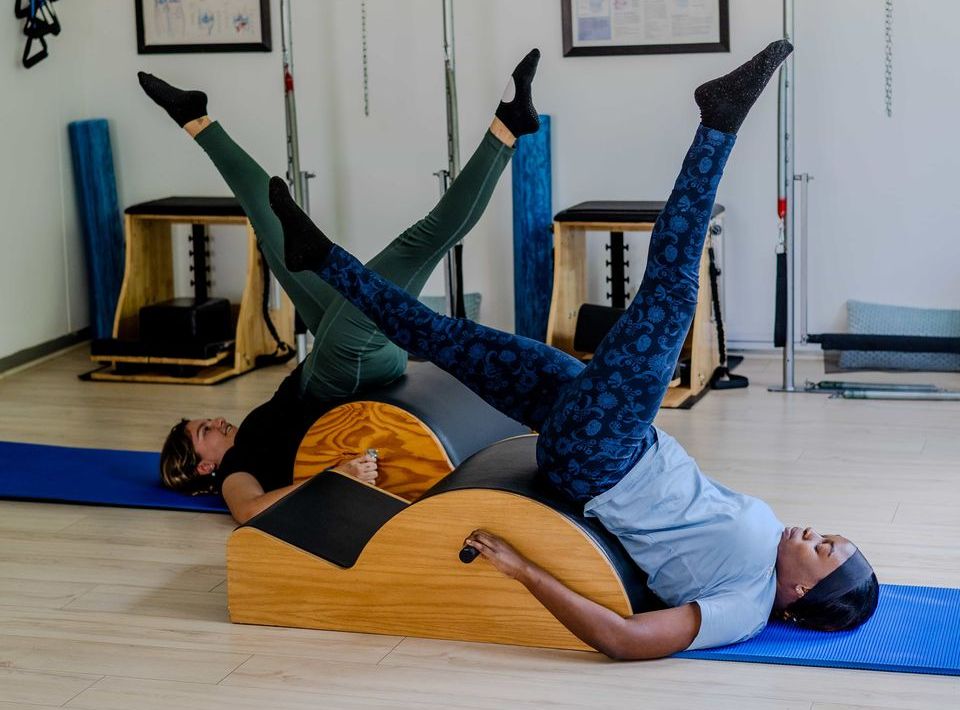
- Studio access: trainees can use the studio and its equipment, from reformers, towers, Wunda chairs and a Cadillac to barrels and small equipment, for their self-practice hours at no extra charge.
- Checks along the way: tests during the course, weekly log sheets and a tutorial before the exams to clear up any questions.
- Mentoring: you can book extra sessions with a mentor for a fee, or use your own mentor once the studio has approved them, so the teaching method stays consistent.
- Payment plans are available, and exams run three times a year (March, July and October).
For a fuller picture of the route from beginner to qualified teacher, read our guide on how to become a Pilates instructor in South Africa, and our explanation of which Pilates certification you need.
Ways to earn once you qualify
You don’t become successful overnight just because you hold a certificate. Clients book you again because of your knowledge, your skill and your confidence, and a thorough qualification is what gives you that confidence. Once clients trust you, they recommend you to others. Our graduate found her bookings grew steadily for exactly that reason.
You also don’t have to give up your current job straight away. Many instructors start part-time. Options include:
- teaching group classes in a studio, where some clients will later ask for private sessions;
- working as a substitute teacher at different studios, which earns extra income and builds relationships;
- teaching online from home, which also lets you keep clients if you move;
- full-time teaching once you are ready to make Pilates your career.
When our trainees finish, we are always glad to consider good graduates for work at our own studio first, and our graduates have gone on to teach overseas.
Frequently asked questions
Can I teach Pilates in another country with a South African qualification?
Many instructors do. Requirements differ from country to country and sometimes from studio to studio, so check the local registration or insurance rules where you plan to work before you move.
Do I need to do Pilates classes before starting a course?
It helps a great deal. Taking regular classes and then the Mat course is the natural first step for most people.
Which course gives me the most options abroad?
The more equipment you can teach, the more studios you can work in. The Comprehensive course covers mat and all the large equipment; if you are already a qualified mat teacher, the Comprehensive Conversion course fills the gap.
Start your training
If teaching Pilates abroad is part of your plan, start with a strong foundation at home. Explore our teacher training courses, download the information pack for current dates and fees, or send us an enquiry. You can also call 011 792 5459 or 072 999 2229, or email info@pilatesdynamics.co.za.