What to expect at your first Pilates session
Nervous about your first Pilates session? Here's what happens in the beginner assessment, what to wear, and how you move into group classes.
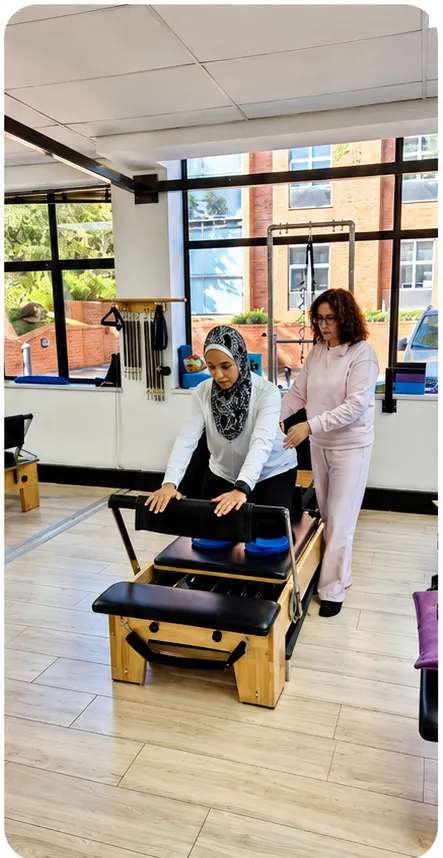
Sometimes the hardest part of starting something new is simply taking the first step. If you have been thinking about Pilates for a while but aren’t sure what happens at your first Pilates session, this guide is for you. At Pilates Dynamics in Randburg, every new client begins with a private, 55-minute beginner assessment with an instructor before joining group classes. You learn the basics, get comfortable with the equipment and walk into your first group class knowing what to expect.
Why your first Pilates session is one-on-one
New clients often worry about the same things. Which class should I choose? Will I know how to use the equipment? What if everyone else has been doing Pilates for years? Starting privately answers those questions before they become a reason to stay at home.
A one-on-one start gives your instructor time to understand your body, your history and your goals. You get to try the fundamentals at your own pace, see how your body responds to different exercises and ask as many questions as you like. Rather than wondering whether you will keep up, you arrive at your first group class prepared.
This applies whether Pilates is completely new to you, you have only followed classes at home or online, or you are returning after some time away.
What to expect at your first Pilates session
Your beginner assessment combines a posture analysis with an orientation to the studio. It usually covers:
- A conversation about you. Your instructor asks about your activity levels, any injuries or niggles, and what you want from Pilates.
- A posture analysis. They look at how you stand and move, and note any imbalances, areas of weakness or restricted movement worth working on.
- The Pilates basics. You learn how to breathe during exercises, how to find and switch on the right muscles, and how to keep your spine, pelvis and joints in good alignment.
- An introduction to the equipment. You try a few exercises on the Reformer and other apparatus, and learn how the springs, straps and footbar work so that instructions in a group class make sense.
- A recommendation. Your instructor suggests which classes suit you best and how often to come.
If you have a medical condition, are pregnant or are recovering from an injury, check with your doctor or physiotherapist before you start, and let us know when you book. Our biokineticist, Aurelie, works alongside our instructors and can help where extra care is needed.
What to wear and bring
- Comfortable, fitted clothing you can move in, so your instructor can see your alignment.
- Socks: exercises are done in socks, and anti-slip socks are best on the equipment.
- A small towel and a water bottle.
Plan to arrive a few minutes early so you can find parking and settle in. For a first-hand account of how it feels to start out, read Pilates from a beginner’s point of view.
More than a mat class: the equipment you will meet
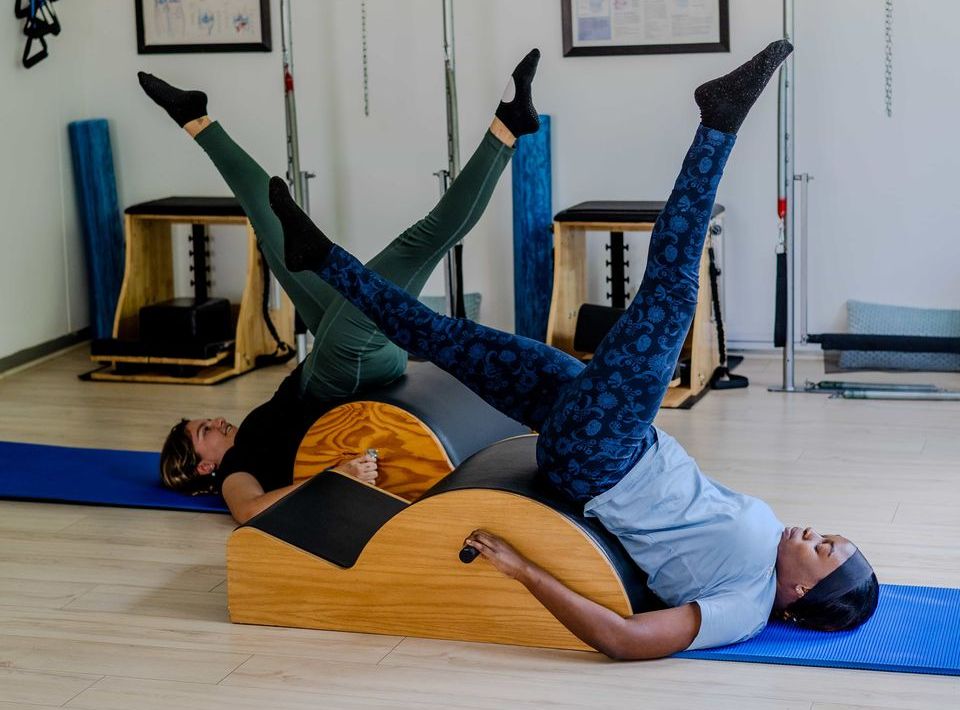
One of the things that makes our studio different is the range of equipment. Alongside mat classes, we teach on Reformers, Wunda Chairs and wall towers, which lets instructors add variety and progression for different levels of experience.
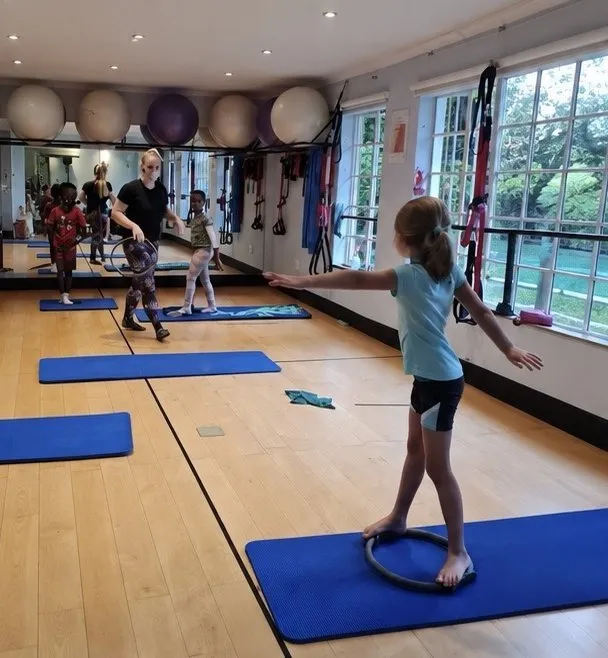
Smaller equipment such as balls, bands, rings, free weights and mini trampolines is built into both mat and Reformer classes. It can make an exercise more challenging, or give you extra support while you are still learning. Some classes add a cardio element, for example rebounding in mat classes or the jump board on the Reformer, and we also offer barre and stretch classes.
Our groups are kept small, so instructors can watch your form and offer corrections and modifications as you go. You can read more in our post on Pilates for beginners.
How Pilates fits into everyday life
Pilates is not only about what happens during the class. Building strength, stability, control, balance and body awareness can support the way you move through your day. Many of our clients use it alongside running, cycling, golf, swimming, team sports or high-intensity training, and many simply want to feel stronger and more confident in their bodies. Some come with a partner or friend, which is a fun way to keep each other motivated.
Each adult class is 55 minutes long and works the whole body, including flexibility. Classes are booked as monthly subscriptions, so your slot is kept for you every week.
A studio you will look forward to visiting
Pilates Dynamics is in the green surroundings of Stonemill Office Park in Darrenwood, Randburg, with a lake and running paths nearby and safe, secure parking. We are central for clients from Linden, Northcliff, Blackheath, Robin Hills and the rest of Randburg. We are also a Discovery Vitality partner, so eligible members can earn points for their classes.
Frequently asked questions
Do I need to be fit or flexible to start?
No. Your first session meets you where you are, and exercises are adapted to your level.
Can I go straight into a group class?
We ask every new client to complete the beginner assessment first. It keeps you safe and helps you get far more out of group classes from day one.
How soon will I notice a difference?
It varies from person to person. Many clients say they feel more aware of their posture and core within a few weeks of attending regularly.
Book your first Pilates session
If Pilates has been sitting on your “I really should try that” list, now is a good time to start. Book your beginner assessment, see current class fees on our pricing page, or contact us. You can also email info@pilatesdynamics.co.za, call 011 792 5459 or WhatsApp 072 999 2229.