Pilates mat course in Johannesburg: Mat & Small Equipment training
Our Pilates mat course in Johannesburg covers mat repertoire, small equipment, anatomy and teaching skills. See what's included and your next steps.

If you are looking for a Pilates mat course in Johannesburg, the Pilates Dynamics Mat & Small Equipment course is the place to start. It is an 85-hour, accredited teacher training course run at our Randburg studio that takes you from the basic to the advanced mat repertoire, shows you how to use small equipment to make exercises easier or harder, and teaches you the anatomy and teaching skills you need to lead safe, effective classes. It is also the foundation for every other course we offer, including reformer training.

What the Pilates mat course in Johannesburg covers
We believe a mat qualification should leave you able to teach with confidence from day one, not just recite a list of exercises. Each exercise is taught with its goal, muscle focus, recommendations and contraindications, so you understand why, when and how to use it.
- Repertoire: mat levels from basic to advanced, with variations and modifications for different bodies and fitness levels
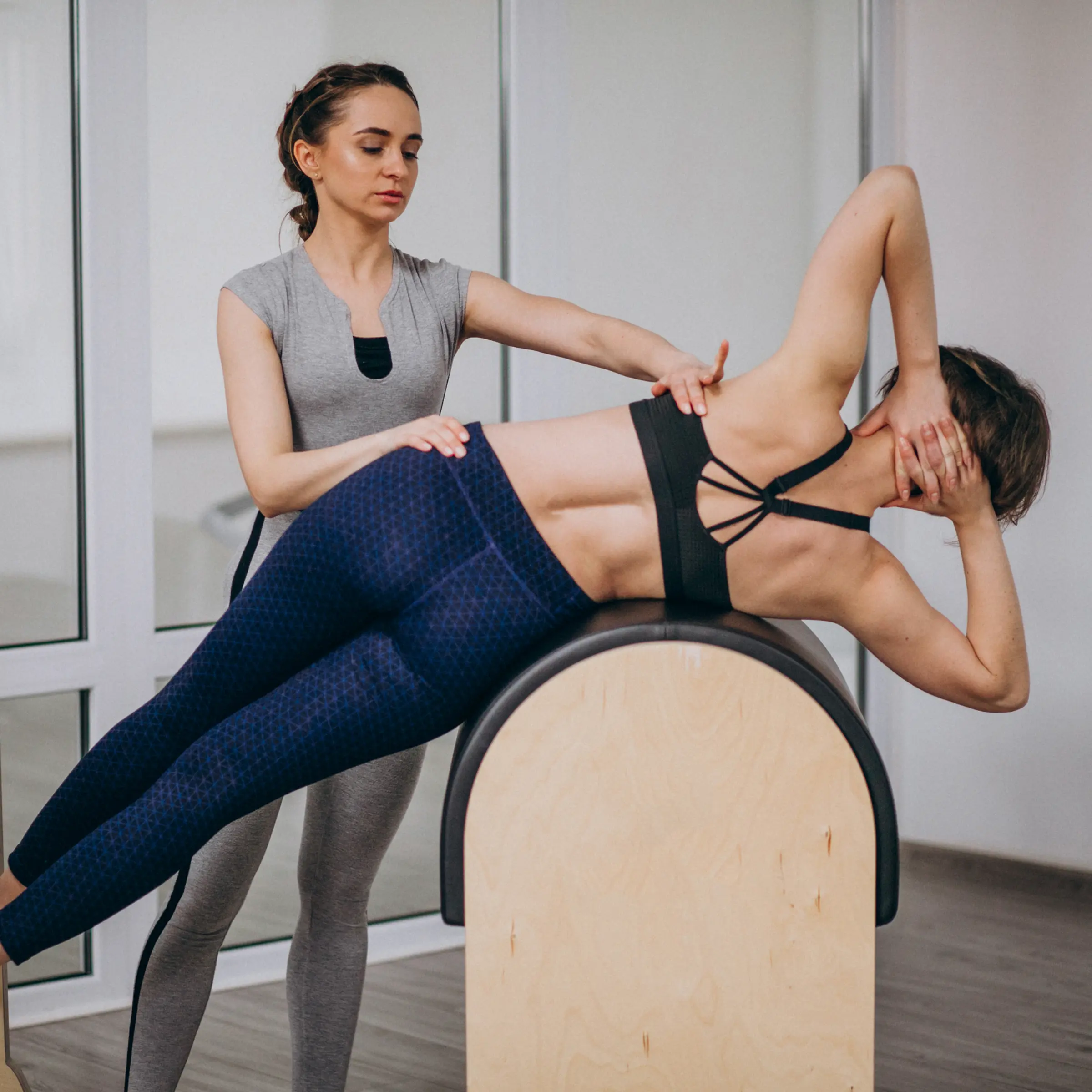
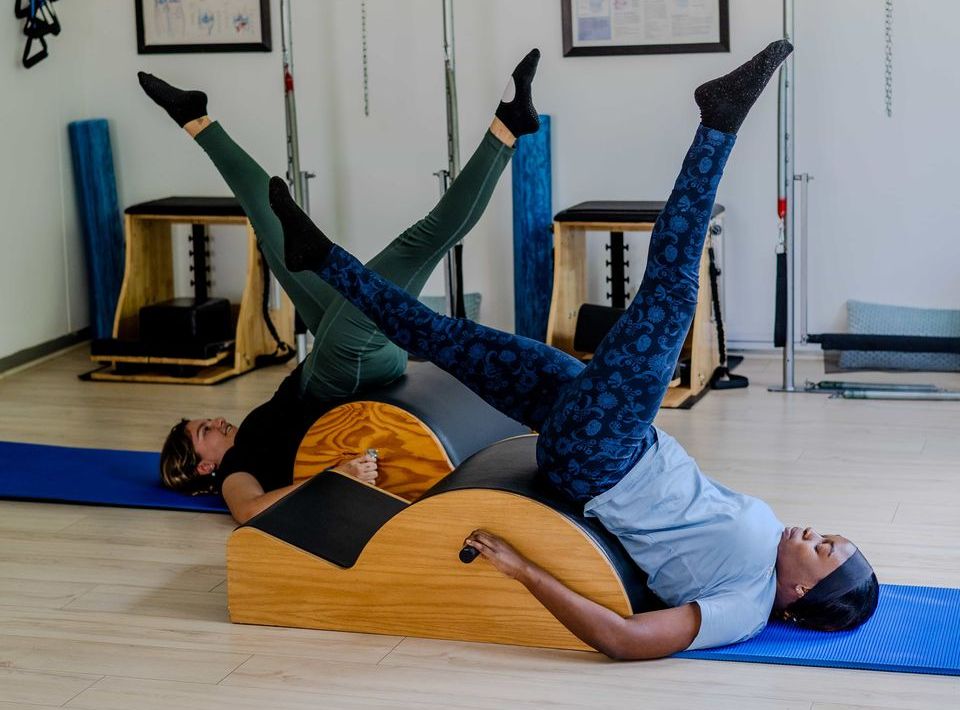
- Small equipment: balls of different sizes, TRX, ballet barre, Bosu, magic ring, resistance bands, arc barrels and free weights, used to add assistance or resistance
- Applied anatomy: how the body moves and how that relates to each exercise
- Posture, injuries and pathologies: common faulty posture patterns and how to adapt exercises safely
- Special populations: guidelines for pregnancy and older clients
- Teaching skills: cueing, programme flow and planning a class
The method is useful well beyond the studio. Instructors use it for rehabilitation as well as conditioning for runners, cyclists, golfers, team sports players and people who lift weights, so the course suits a wide range of interests.

Who the course is for
The Mat & Small Equipment course suits physiotherapists, biokineticists, occupational therapists, personal trainers, dancers and exercise specialists, as well as people in corporate jobs who want to change careers. You do not need a background in anatomy because it is taught as part of the course.
If you are a physiotherapist or biokineticist and would rather not repeat the anatomy section, you can ask about recognition of prior learning (RPL), where your existing training is considered for credit.
Age is not a barrier either. People qualify at many stages of life; what matters is the effort and consistency you put into your practice.
How the course works
Lectures
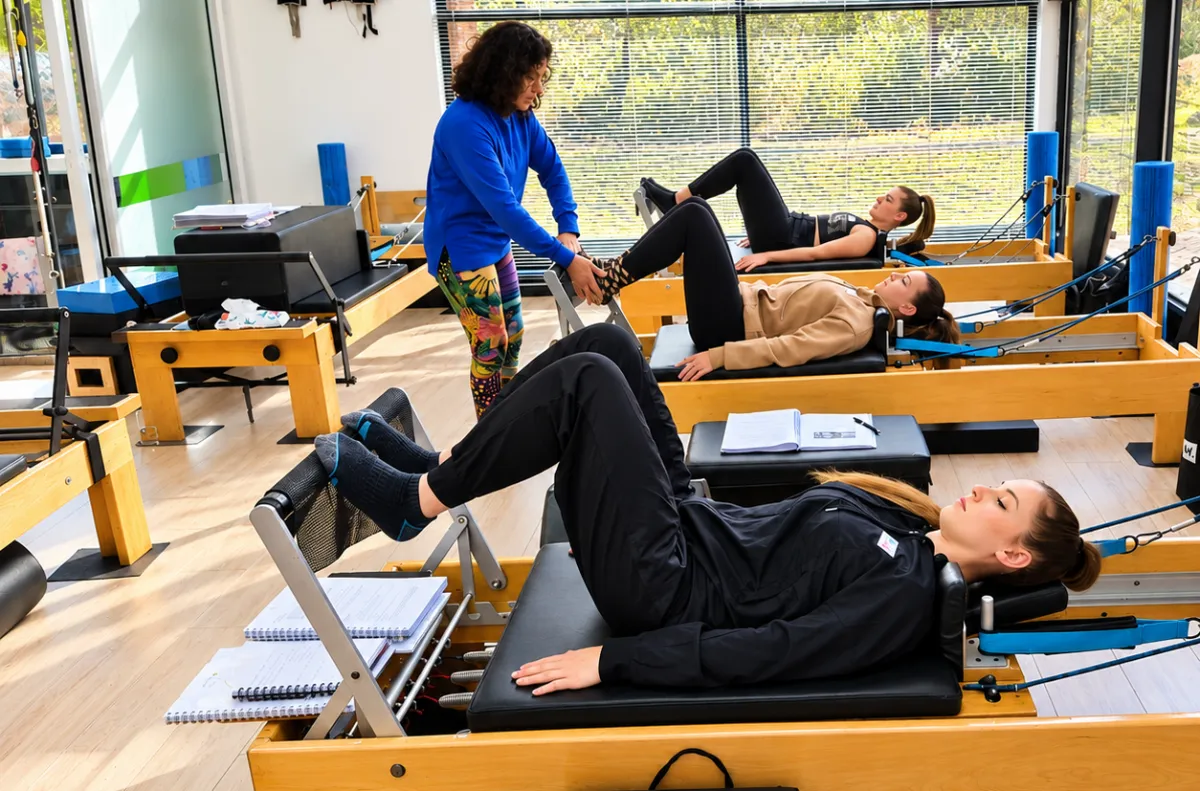
Lectures are run in small groups of 4 to 10 people or privately, one-on-one, on days and times that suit you. Online tuition for the lectures is also possible, and you receive a course manual and access to an online exercise video library.
Practical hours
After the lectures you complete your practical hours: self-practice, observation and practice teaching. Much of this can be done at home and submitted as evidence, and observation can be done in the studio or online. You decide how quickly you work through your hours.
Exams and accreditation
Exams run three times a year, in March, July and October, and the pass mark is 70%. The course earns 20 CPD points with REPSSA, 30 CEUs with SASP and CPD points with BASA, so it carries weight with both fitness and healthcare professionals.

Why we don’t recommend condensed or online-only courses
It is tempting to choose the shortest route. But we regularly meet instructors who qualified through a weekend or online-only mat course and then lack the confidence to teach, or find that reformer training is a struggle because their foundation is thin. When you apply for a teaching job, you will usually be asked to teach a sample session, and that is where depth of knowledge shows. A course with proper lecture time, a meaningful number of practical hours and hands-on correction is worth the extra effort. Our guide on how to become a Pilates instructor in South Africa explains the full process.

Your next step: reformer and combo training
A mat qualification is the prerequisite for teaching reformer, so once you have it you can move on in one of two ways:
- Intensive Reformer course (70 hours) if you already hold a mat qualification and want to add the reformer. Read more about the intensive reformer course.
- Mat & Intensive Reformer combo (155 hours) if you want to do both from the start and save yourself a second enrolment.
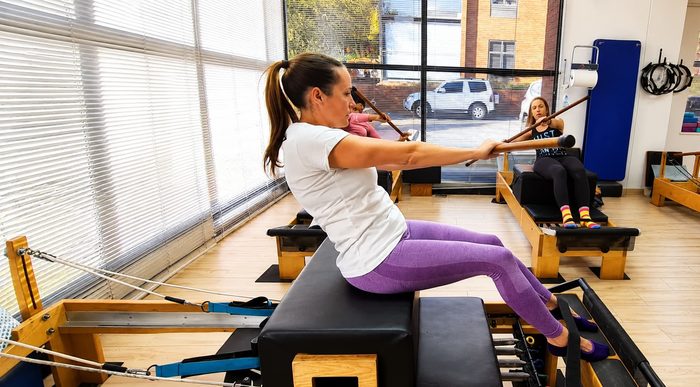
If you want to teach on every piece of apparatus, the Comprehensive course combines mat with the reformer, tower, Wunda chair and barrels.

Frequently asked questions
Can I teach reformer without a mat qualification?
No. The mat qualification forms the basis of reformer training. You can take both together through the combo course.
Is there work after I qualify?
Many of our graduates teach at our studio, at other studios around Johannesburg and abroad, and some have opened their own spaces. See our instructor jobs page for current opportunities.
When does the next course start?
Group dates change through the year, so check the info pack for the current schedule. Private lectures can start at a time that suits you.
Start your mat training
Read the full details of the Mat & Small Equipment course, compare it with the Mat & Intensive Reformer combo, and download the info pack for current dates and fees. When you’re ready, register online or email info@pilatesdynamics.co.za.