Pilates FAQ: answers to common questions about Pilates classes
Our Pilates FAQ answers what new clients ask most: mat vs Reformer, fitness levels, pregnancy, back pain and booking. Find your answer here.

New to Pilates, or thinking about switching studios? This Pilates FAQ answers the questions we hear most often at Pilates Dynamics in Randburg, from what Pilates actually is and whether you need to be fit, to which classes to choose, how often to come and whether it is safe with an injury or during pregnancy. The answers are grouped by topic, so jump to the section you need.
Getting started with Pilates
What is Pilates?
Pilates was developed by Joseph Pilates in the early 20th century and was originally called “Contrology”. It is a full-body method that uses body weight, springs and resistance equipment, performed with control and precision. It focuses on the core, breathing and correct alignment of the spine and pelvis, and strengthens the stabilising muscles that support your skeleton, which can help with posture and everyday aches.
How is Pilates different from yoga?
Both are low-impact, but the focus differs. Pilates emphasises core strength, posture, muscle tone, balance and controlled movement, with a deep lateral breathing pattern linked to each exercise. Yoga, which has ancient roots in India, centres on flexibility, balance and mindfulness, often with a spiritual element, and usually uses less equipment. Pilates is also widely used by biokineticists and physiotherapists for rehabilitation.
Do I need to be fit or flexible to start?
No. Every exercise has modifications to make it easier or harder, so Pilates suits everyone from athletes and dancers to people who rarely exercise. If you are completely new, our guide for Pilates beginners explains what to expect.
Is Pilates only for women?
Not at all. Joseph Pilates was a man and a keen sportsman, and our clients include men, women, teens and seniors of all shapes and sizes. Runners, cyclists, golfers, rugby and cricket players, CrossFit and weight-training enthusiasts, and people who sit all day all benefit.
Can children do Pilates?
Yes. We run kids’ Pilates classes for ages 5 to 12, and Pilates can be continued well into later life.
How do I start?
Every new client begins with a 55-minute beginner assessment, which includes a posture analysis and an orientation to the equipment, so your instructor knows your body before you join a group.
Classes and equipment

What is the difference between mat and equipment Pilates?
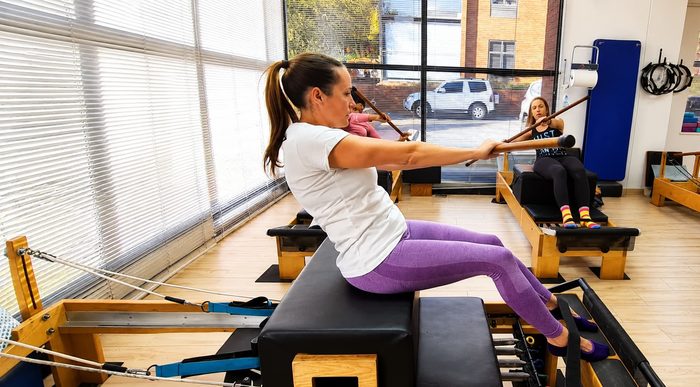
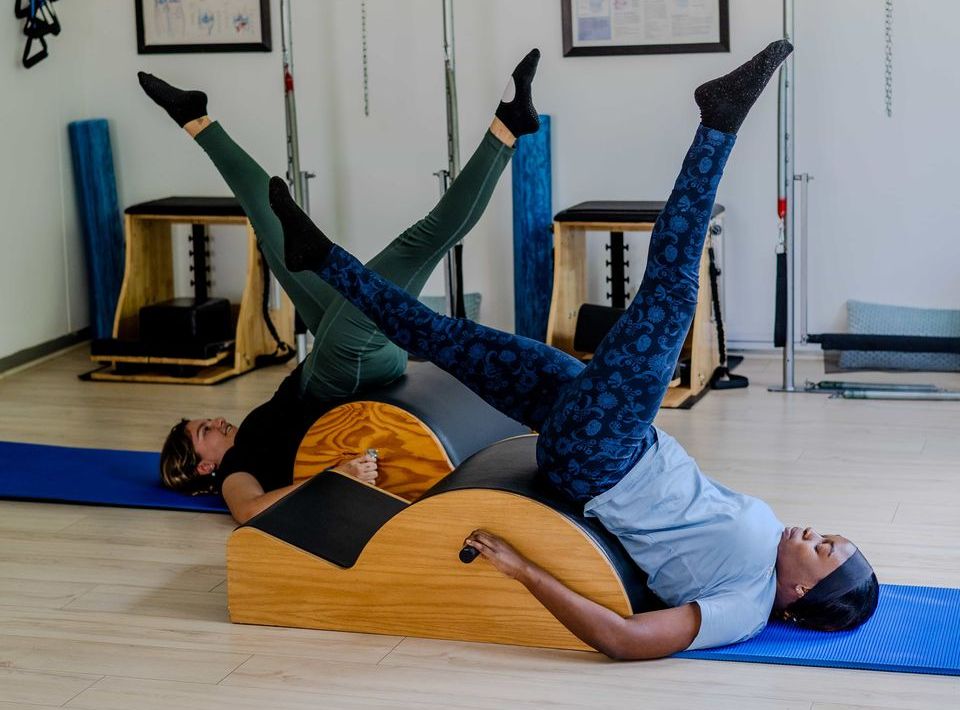
Mat Pilates uses your own body weight against gravity, with small equipment such as balls, bands, rings, the ballet barre, TRX and rebounders for extra resistance and variety. Large equipment classes use spring resistance on the Reformer, Tower, Wunda Chair, Cadillac and ladder barrel, with small equipment added in.
Is a Reformer class better than a mat class?
Each has its strengths. The Reformer’s springs offer more challenging strength and endurance work, and also more support for joints, which can help people with injuries or limited mobility. Mat work is a great place to learn form and control with body-weight exercises. Many of our clients do one of each per week. Read our full comparison of Reformer vs mat Pilates.
Is there cardio in Pilates?
Our mat and Reformer classes include cardio from time to time to raise your heart rate. The Reformer jump board and rebounders are used for low-impact cardiovascular and plyometric work.
Are there different styles of Pilates?
Studios vary in their exercises and equipment, but the principles of Pilates are the same. Our classes use a wide variety of equipment so they stay interesting.
What do I need to bring?
We provide all equipment, mats and water. Just bring a towel and an empty water bottle.
Booking and pricing

How much do Pilates classes cost?
It depends on whether you choose group, private, duo or trio classes and which equipment you use. Classes are paid as monthly subscriptions, and you will find current rates on our pricing page.
Group or private classes?
Group classes are kept small so the instructor can correct everyone. Private one-on-one sessions, or duo and trio sessions with a friend or family member, suit people who want individual attention or are working around an injury. All adult classes are 55 minutes.
How often should I do Pilates?
We suggest at least twice a week. If you have other training commitments, once a week is still far better than nothing.
When is the studio open?
Monday to Thursday 06:00 to 19:00 and Friday 06:00 to 17:30. Group times are on the class timetable. Discovery Vitality members earn points for workouts at the studio.
Health and safety

Can Pilates help with back pain or injuries?
Many people find Pilates helps with back, neck and shoulder pain, and it is widely used to help prevent injuries by keeping the muscles around your joints strong and flexible. If you have an injury or medical condition, check with your doctor or physio first; our biokineticist, Aurelie, can help you start safely.
Is Pilates safe during pregnancy?
Pilates is a popular choice before and after birth, with exercises adapted from the second trimester. Get your doctor’s go-ahead first, and see our pre- and post-natal Pilates classes.
Does Pilates help with weight loss?
Pilates can support weight loss and toning when combined with a healthy diet and cardio. Consistency is what makes the difference.
Can Pilates help with stress, period cramps or desk stiffness?
Many clients find the focused breathing helps them unwind, and gentle stretching and rotation can ease cramps. For desk workers, Pilates strengthens the core and upper back and helps counter the forward slump of sitting at a computer.
Have a Pilates question we have not answered?
If your question is not in this Pilates FAQ, we are happy to help. The easiest next step is to book your beginner assessment, where you can ask your instructor anything in person. You can also call 011 792 5459 or 072 999 2229, or email info@pilatesdynamics.co.za.