Reformer vs mat Pilates: which is best for you?
Reformer vs mat Pilates: how they compare on resistance, support, injuries and beginners, with a side-by-side table to help you choose the right class.
Reformer vs mat Pilates: which is better? Neither is better across the board. Reformer Pilates uses a spring-loaded machine that adds resistance and support, while mat Pilates uses your own body weight and small equipment to build core strength and control. The right choice depends on your goals, experience and any injuries, and for most people the best answer is a mix of both, because the two complement each other.
What is reformer Pilates?
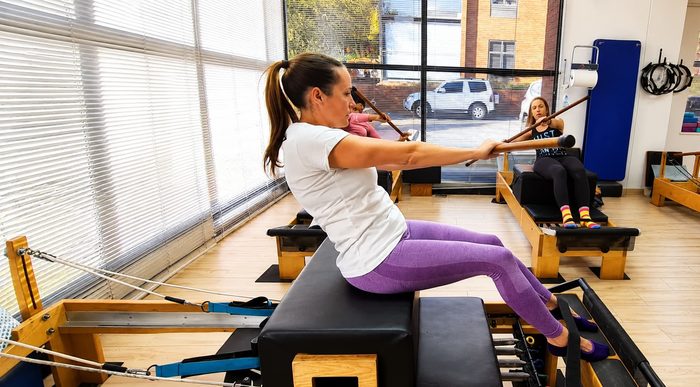
Reformer Pilates is a low-impact, mind-body workout done on a Pilates reformer: a sliding carriage with a foot bar, springs and pulleys. The springs can be set lighter or heavier, so the same exercise can be made gentler for someone recovering from injury or much more intense for an athlete. In our classes the springs are combined with small props such as magic circles, free weights, weighted balls and poles, so there are literally thousands of possible exercises. You can read more about the machine in our article on the Pilates reformer.
Benefits of reformer Pilates
- Adjustable resistance: springs let you add load gradually, for a challenging and effective workout.
- Support and stability: the machine gives you a stable platform, which helps people with limited range of movement or certain injuries.
- Variety: a huge range of exercises and modifications suits all fitness levels and goals.
- Bone and joint health: working against resistance can support bone and joint health.
- Rehabilitation: the reformer is widely used to address muscle imbalances and support recovery.
Because the reformer is a moving machine with springs, proper instruction matters. Always train with a properly qualified Pilates instructor who can set the springs correctly and give you safe modifications.
What is mat Pilates?
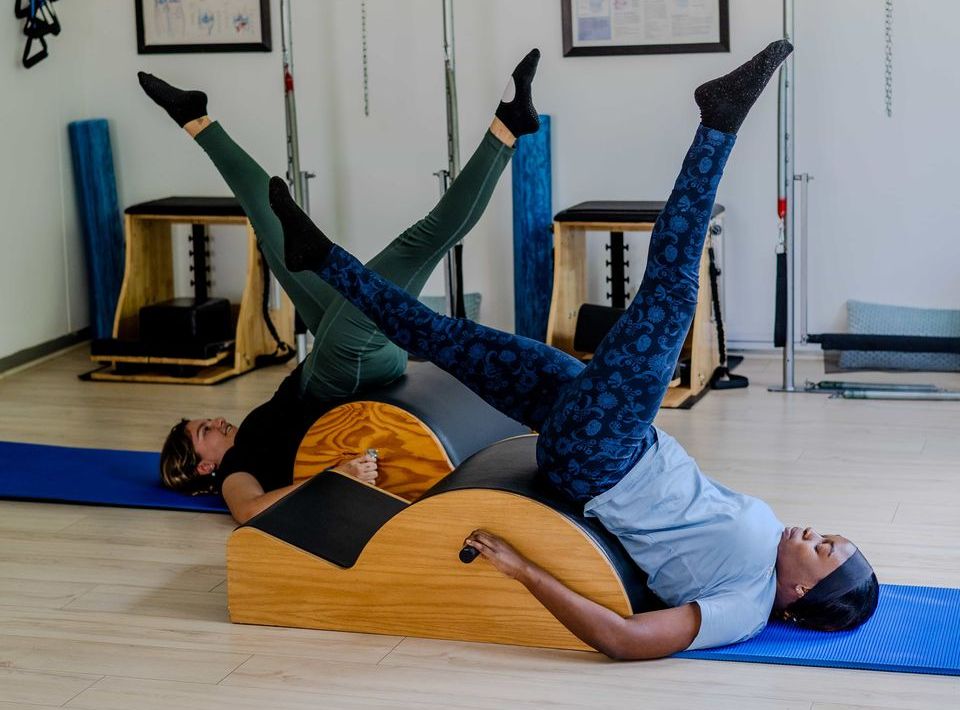
Mat Pilates is based on the original exercises Joseph Pilates developed to strengthen his own body. It is a strengthening and lengthening workout that focuses on your core (your whole trunk), while also training your arms and legs. The mats we use are thicker than yoga mats for extra support.
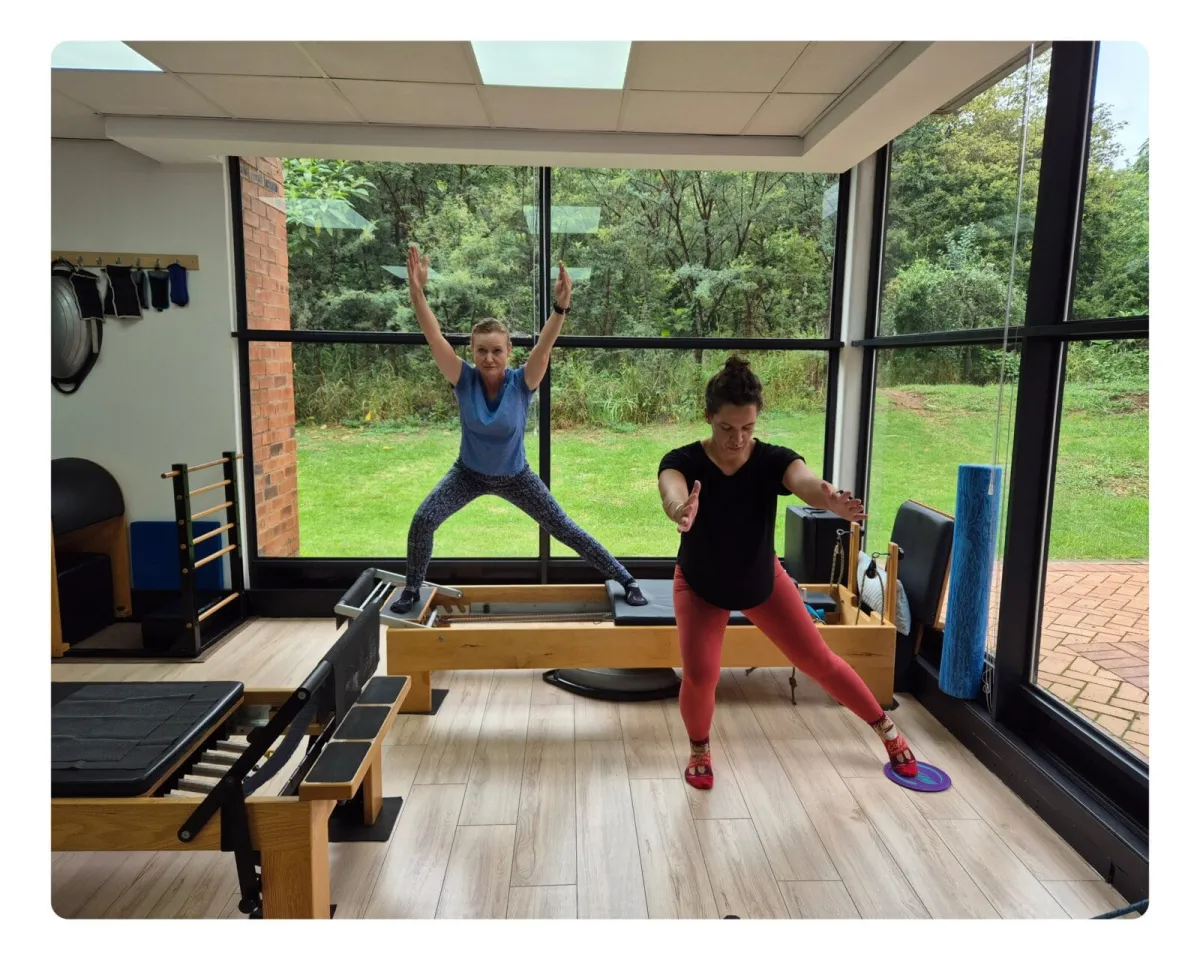
Mat classes are far from just floor work. At Pilates Dynamics we add small equipment to intensify the workout and keep it interesting, including Bosu balance trainers, free weights, magic circles, toning bars, kettlebells, rebounders (mini trampolines), resistance bands, the ballet barre, TRX and large balls. Some of these bring in a cardio element, without the stress on your joints.
Benefits of mat Pilates
- Body-weight control: learning to control your own body weight builds core strength and body awareness.
- Low impact: gentle on the joints and suitable for most beginners.
- Accessible: once you know the basics, many exercises can be done at home with minimal equipment.
- Core strength, flexibility and posture: the foundations of Pilates, trained in every class.
Mat work can be harder than it looks, because there are no springs to assist you. On the other hand, the reformer offers a wider range of exercises and modifications.
Reformer vs mat Pilates: side-by-side comparison
| Feature | Reformer Pilates | Mat Pilates |
|---|---|---|
| Resistance | Adjustable springs and pulleys | Your body weight plus small equipment |
| Support | Machine supports and guides movement | You support and control your own body |
| Impact on joints | Low impact | Low impact |
| Best for | Building strength, rehabilitation, adding variety and challenge | Core control, body awareness, cardio-style classes with props |
| Beginners | Suitable after an orientation on the equipment | Suitable from the start |
| At home | Needs a reformer machine | Easy to practise with a mat |
Which should you choose?
Think about what you want from your Pilates:
- You are recovering from an injury or have limited mobility: the reformer’s support and adjustable springs are often helpful. Check with your doctor or physio first; our biokineticist, Aurelie, can also advise you.
- You want to build strength and variety: the reformer’s resistance and range of exercises are a great fit.
- You want core control you can take anywhere: mat Pilates teaches you to control your body without assistance.
- You want a bit of cardio: mat classes with rebounding, TRX or the barre will raise your heart rate.
At Pilates Dynamics we encourage clients to do both, as the benefits complement each other. If you are just starting out, our guide to Pilates for beginners explains what to expect.
Why a Pilates studio is different from a gym class
Wherever you do Pilates, class size and instruction make a big difference. Gym classes are often large, so the instructor usually demonstrates at the front and can’t correct everyone’s form. In a small studio class your instructor walks around, adjusts your position and offers easier or harder variations for each person. That is how you get the full benefit of Pilates, safely.
Frequently asked questions
Is reformer Pilates harder than mat Pilates?
Not necessarily. The springs can make exercises harder or easier. Many people find mat work surprisingly challenging because there is nothing to assist them.
Can beginners start on the reformer?
Yes, after an orientation so you learn how to use the machine safely. Our beginner assessment covers this.
Which is better for toning?
Both build lean, toned muscle. Combining reformer and mat classes gives you the most variety.
Try both at Pilates Dynamics
New clients start with a 55-minute beginner assessment, which includes a posture analysis and orientation, so we can recommend the right mix of mat and reformer classes for you. See our class prices and timetable, or call 011 792 5459 or 072 999 2229, or email info@pilatesdynamics.co.za.