Neutral spine vs imprinted spine in Pilates: when does it matter?
Neutral spine vs imprinted spine in Pilates: how to find each position, when to use it, and why both are correct. A clear guide from our Randburg studio.

Neutral spine vs imprinted spine in Pilates is a question almost every new client asks at their first orientation and assessment at Pilates Dynamics: should I keep my spine neutral, or should I press my lower back into the mat? The short answer is that both positions are correct, depending on the exercise and your body. A neutral spine keeps the spine’s natural curves and is the default for most movements; an imprinted spine gently flattens the lower back and gives extra support when your core cannot yet hold neutral, for example when both legs are lifted.
The confusion is understandable, because many people slip into an imprinted position automatically, whether or not it suits the movement. Understanding the difference helps you build core strength, protect your lower back and perform Pilates exercises correctly. Below we explain each position, when to use it and how we teach spinal alignment.
What is a neutral spine in Pilates?
A neutral spine is the natural alignment of the spine, where the pelvis, ribcage and spine are positioned optimally for stability and movement.
To find a neutral spine while lying on your back:
- Place the heels of your hands on the front hip bones (ASIS).
- Position your middle fingers on the pubic bone.
- Create a triangle with your hands.
- Make sure the front hip bones and pubic bone are level and aligned horizontally.
- Keep the ribcage relaxed so the lower ribs do not lift towards the ceiling.
In neutral, there may be a small natural space between your lower back and the mat. The size of this gap varies from person to person, depending on spinal curvature, anatomy and soft tissue.
A neutral spine does not mean forcing the lower back flat into the mat. It means keeping the spine’s natural curves while the pelvis and ribcage stay aligned.

Why is neutral spine important?
Holding a neutral spine during Pilates exercises helps create spinal and pelvic stability. When the body is well aligned:
- The deep core muscles function more effectively.
- The muscles around the hips and spine work efficiently.
- Unnecessary shearing or pulling forces on the joints are reduced.
- Postural muscles can support movement correctly.
- The risk of discomfort and lower back pain may be reduced.
Neutral is often the preferred position because it encourages healthy movement patterns that carry over into everyday activities such as walking, lifting, sitting and standing. Our post on proper form and posture in exercise explains why alignment matters beyond the mat.

What is an imprinted spine in Pilates?
An imprinted spine is when the pelvis gently tilts backwards (a posterior pelvic tilt), flattening the natural curve of the lower back into the mat. It is usually achieved by engaging the abdominal muscles and slightly tucking the pelvis.
An imprinted spine gives extra support during certain abdominal exercises, especially for people who struggle to keep the spine stable when the legs are lifted away from the floor.
When should you use an imprinted spine?
Not everyone can comfortably hold a neutral spine in every exercise. During abdominal work with both legs in the air, for example, some clients experience:
- Excessive arching of the lower back
- Reduced abdominal engagement
- Lower back discomfort or pain
- Difficulty controlling pelvic alignment
In these situations, an imprinted spine may be a safer and more effective option. With the legs in tabletop, bringing the knees slightly closer towards the chest encourages a gentle posterior pelvic tilt and a more imprinted position. This often helps clients engage their abdominals better while reducing strain on the lower back.
Neutral spine vs imprinted spine: which one is correct?
Both are correct when used appropriately. The goal is not to force every client into the same position. Good Pilates instruction considers:
- Individual anatomy
- Posture
- Mobility restrictions
- Existing injuries
- Strength levels
- Exercise objectives
A qualified instructor will decide whether neutral or imprinted spine suits a particular client and exercise, and will progress you towards neutral as your core strength improves. If you have a back injury or a condition such as scoliosis, check with your doctor or physio first; our biokineticist, Aurelie, can help tailor your programme.

How Pilates Dynamics teaches spinal alignment
Pilates Dynamics is a Pilates studio and teacher training centre in Randburg, Johannesburg, with 19 years of experience in Pilates education and movement training.
In our classes
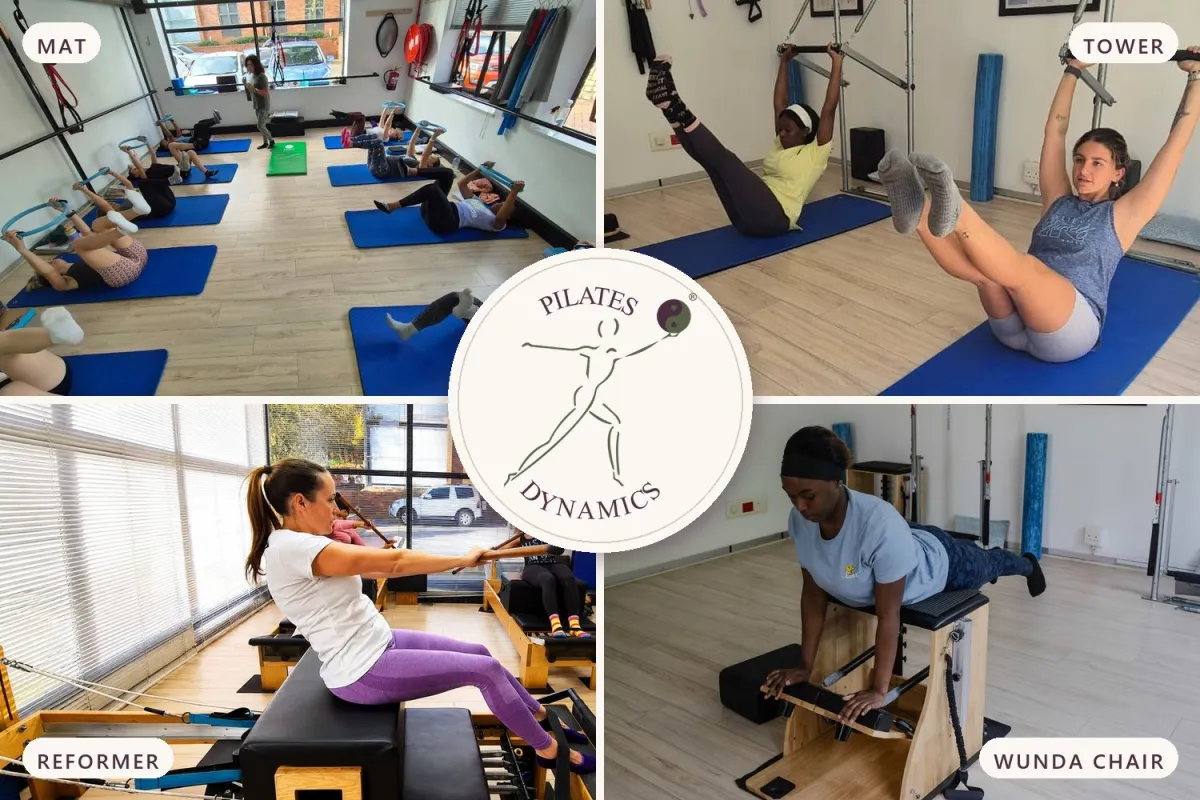
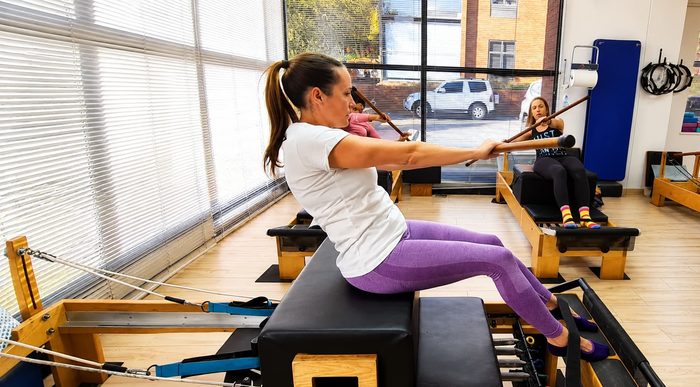
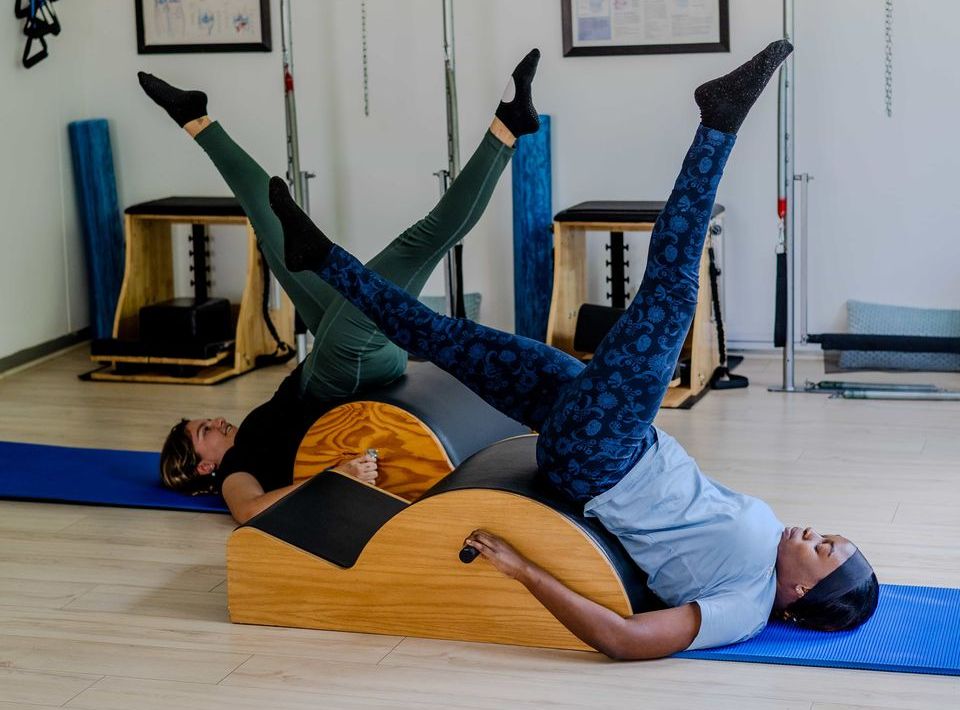
We offer private, duo and small-group Pilates on the mat and on the reformer and other equipment. Our instructors help you improve posture, spinal alignment, core strength, flexibility and overall movement quality, whether you are a beginner or an experienced practitioner. Every new client starts with a beginner assessment, which includes posture analysis, so we know which position suits you before you join a group.
In our teacher training
Our Pilates teacher training courses cover functional anatomy, biomechanics, postural assessment, injury management, exercise adaptations, movement screening and spinal alignment principles. Students learn to identify postural deviations and apply suitable modifications for different body types, rather than a one-size-fits-all approach.

Frequently asked questions
Should my lower back touch the mat in Pilates?
Not necessarily. In neutral there is usually a small gap. Your lower back only presses into the mat when you deliberately imprint.
Is imprinting bad for my back?
No. Imprinting is a useful, supportive position for specific exercises. It only becomes a problem if you use it for everything and never learn to work in neutral.
How do I know which position to use?
Your instructor will cue it for each exercise. If you are new, our post on your first Pilates session explains what to expect.
Learn to move well with Pilates Dynamics
Want help finding your neutral spine? Book a beginner assessment, view our class prices, or call 011 792 5459, WhatsApp 072 999 2229 or email info@pilatesdynamics.co.za.