What is Pilates? A clear guide for beginners
What is Pilates? Learn where the method comes from, how mat and reformer Pilates differ, what happens in a class and who it suits. Start here.

What is Pilates? Pilates is a low-impact exercise method that builds strength, flexibility and control, with a strong focus on your core: the deep abdominals, obliques, lower back, pelvic floor, hips and inner thighs. Exercises are slow, precise and coordinated with your breathing, and they are done on a mat, with small props, or on spring-loaded machines such as the reformer. Because the emphasis is on good posture and correct form rather than simply “feeling the burn”, Pilates suits almost everyone, from complete beginners to athletes.
What is Pilates and where does it come from?
Pilates (pronounced puh-lah-teez) was developed by Joseph Pilates in the early 20th century. He originally called it “Contrology”, which says a lot about the method: it is about controlling your movement with your mind, rather than swinging through repetitions.
Joseph Pilates was involved in many sports and designed the method as an all-round form of exercise for athletes and everyday people alike. Its core principles are still taught today:
- Control of every movement, from start to finish
- Breathing patterns that support the work
- Alignment of the spine and pelvis
- Core strength as the foundation for movement
- Precision and concentration, so the right muscles do the work
Pilates is sometimes compared to yoga. Both connect mind and body and improve flexibility, but Pilates puts more emphasis on targeted strength, core stability and correct muscle recruitment.
Mat Pilates and equipment Pilates
Mat and small equipment
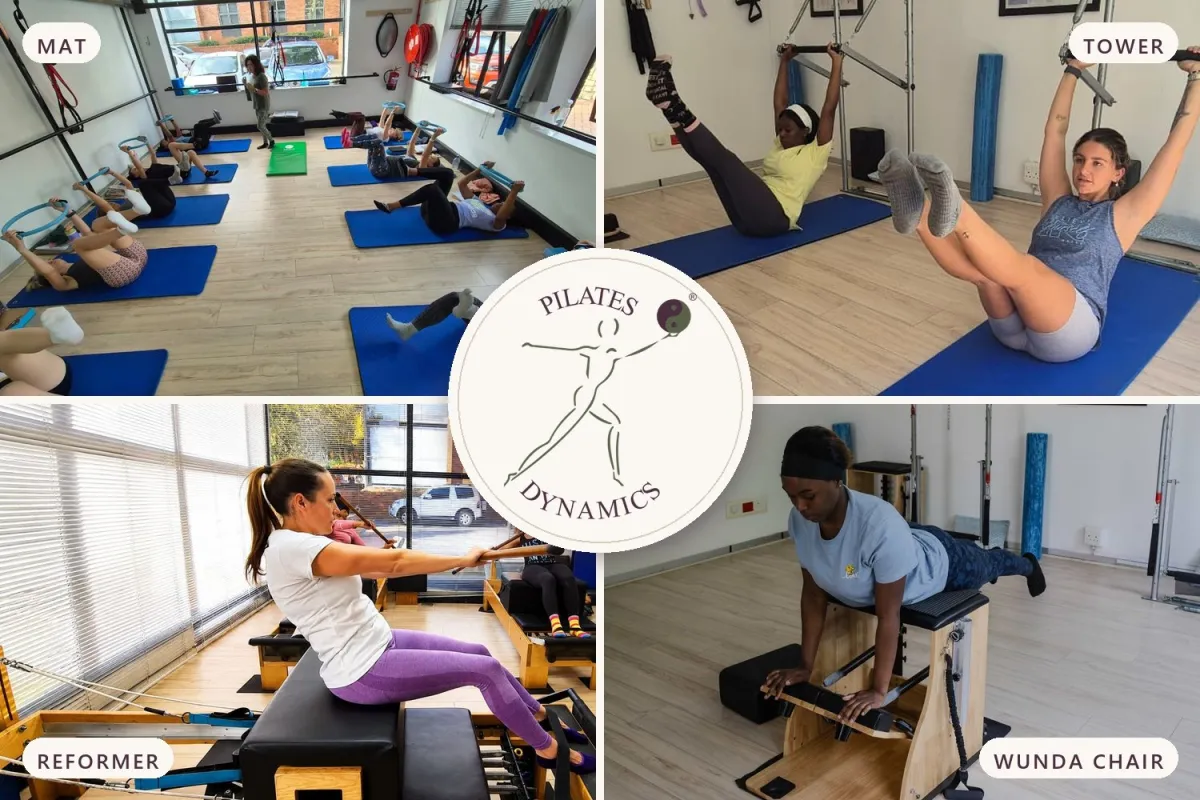
Mat Pilates uses your body weight against gravity, often with props that add challenge or support: bands, magic rings, balls, foam rollers, light weights, Bosus and rebounders. Classic exercises include the Hundred, the Roll Up, Spine Stretch Forward, bridges and leg work.
Reformer and other large machines
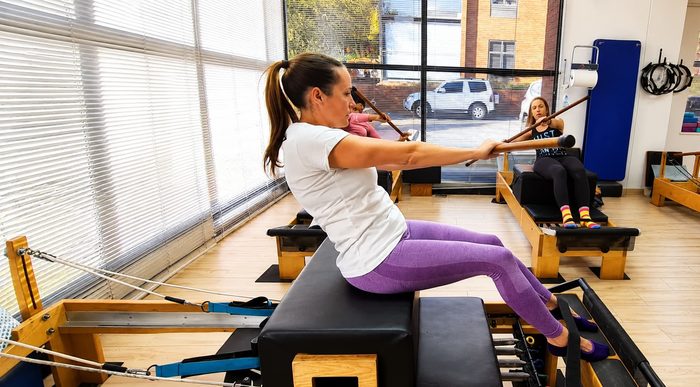
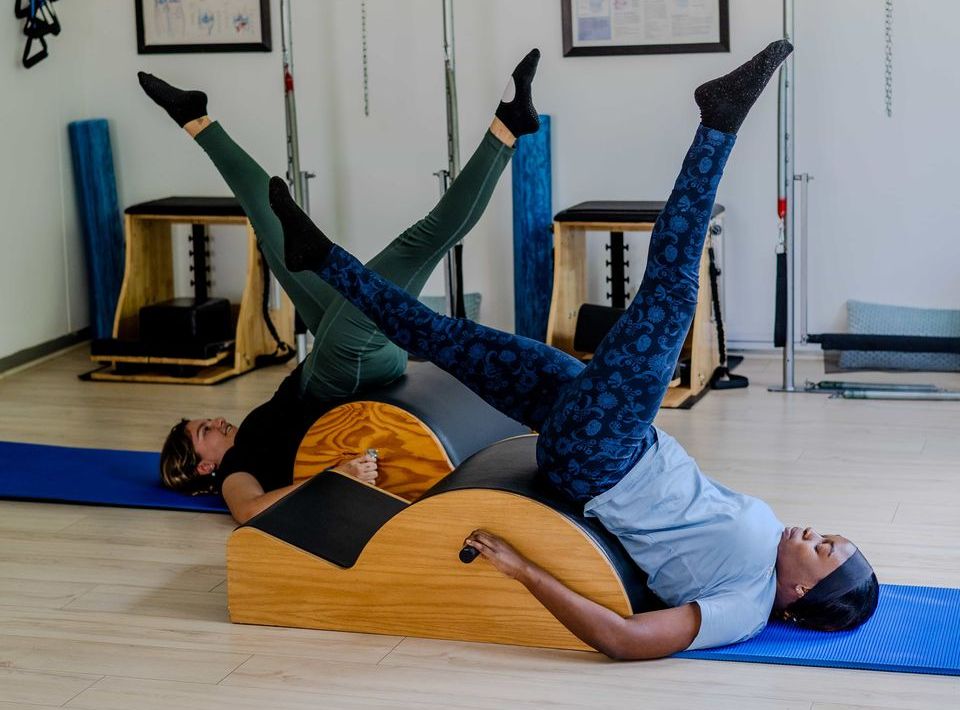
Reformer Pilates is done on a sliding carriage attached to springs and pulleys. The springs can add resistance or give support, so the same exercise can be made easier for a beginner or harder for an athlete. Exercises are done lying, seated, kneeling or standing, and a jump board adds low-impact cardio. Studios like ours also use the tower, Cadillac, Wunda chair and barrels. If you are deciding where to start, read reformer Pilates vs mat Pilates.
What happens in a typical Pilates class?
A well-structured Pilates class works the whole body. A typical session runs roughly like this:
- Warm-up and breathing, to connect with your core
- Legs, glutes and hips
- Abdominals
- Arms and upper body
- Side work and balance
- Back strengthening and full-body exercises
- Stretching to finish
Mobility is woven through the whole class. And you are unlikely to get bored: every exercise has variations and progressions, so as you get stronger there is always a slightly harder version to work towards. The moves need concentration, so you cannot simply go through the motions.
The benefits of Pilates in brief
Regular Pilates can help with:
- Core strength and spinal stability
- Posture, so you sit and stand taller
- Flexibility and joint mobility
- Muscle tone and endurance
- Balance and coordination
- Injury prevention, by correcting muscle imbalances
- Body awareness and stress relief
Pilates is popular as cross-training for golfers, runners, cyclists, cricketers, tennis players and gym-goers, and it is easy to modify for beginners and older adults. For the full picture, read what Pilates does to your body.
Frequently asked questions
Is Pilates suitable for beginners?
Yes. Every exercise can be adapted, and a good studio will start you at the right level. New clients at our studio begin with a one-on-one assessment before joining a group.
How often should I do Pilates?
Two or three sessions a week is a good starting point for most people. Consistency is what brings results.
Can I do Pilates with an injury or a medical condition?
Often, yes, with modifications. Check with your doctor or physio first. At Pilates Dynamics, our biokineticist, Aurelie, works with our instructors so your programme takes your history into account.
Try Pilates at Pilates Dynamics in Randburg
Pilates Dynamics has been teaching Pilates in Darrenwood, Randburg, between Northcliff, Cresta and Linden, since 2007. Our classes are small, our instructors are qualified and keep learning, and our programmes change regularly. New clients start with a 55-minute beginner assessment with posture analysis and an orientation to the equipment. See our class prices, or call 011 792 5459, WhatsApp 072 999 2229 or email info@pilatesdynamics.co.za.