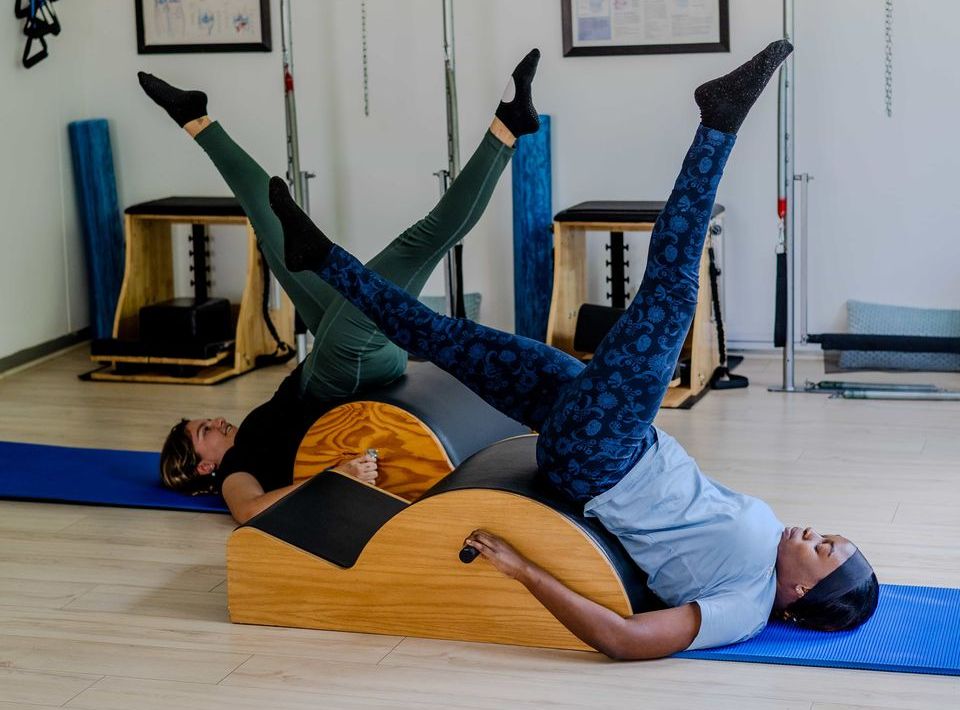
How long does it take to correct posture with Pilates?
How long does it take to correct posture with Pilates? An honest timeline, what affects it and common posture problems. Start with a posture analysis.

How long does it take to correct posture with Pilates? Many people notice a difference within a few weeks of regular sessions: they feel taller, more aware of how they sit and stand, and less stiff at the end of the day. Lasting change, where better posture becomes your default without thinking about it, usually takes a few months of consistent practice. The exact timeline depends on how often you train, how long you’ve had your postural habits, and what is causing them, which is why we start every new client with a posture analysis.
How long it takes to correct posture with Pilates
There is no fixed number of classes that “fixes” posture, and anyone who promises one is guessing. As a rough, honest guide, this is what many of our clients experience with two to three classes a week:
- The first few weeks: you become more aware of your alignment. You start noticing when you slump at your desk or push your head forward, and you learn how to correct it.
- After one to three months: the deep muscles that hold you upright get stronger, tight areas start to loosen, and holding good posture takes less effort. Friends or family may comment that you look taller.
- Beyond three months: improved posture becomes more automatic, and many people find that recurring aches in the neck, shoulders or lower back are less frequent.
What affects your timeline
- Frequency. Once a week helps; two to three times a week usually brings change faster.
- Daily habits. An hour of Pilates can’t fully undo eight hours of slumped sitting. Regular movement breaks make a big difference.
- The cause. Posture from muscle imbalance or habit tends to respond well to exercise. Structural conditions such as scoliosis, or posture linked to injury or pain, may need input from a doctor or physio, and our biokineticist, Aurelie, can help with these cases.
- How long you’ve had it. Patterns built up over many years usually take longer to change than recent ones.
Common posture problems Pilates can help with
Good posture starts at the feet and runs all the way to the head. These are the patterns we see most often:
Feet
Flat feet, high arches, and feet that roll in (pronation) or out (supination) change how weight travels up through the knees, hips and spine. Because the whole body is connected, a problem at the feet can affect alignment everywhere above them.
Kyphosis (rounded upper back)
Long hours sitting at a desk, driving or looking down at a phone pull the shoulders forward and round the upper back. Tiredness and poor sitting habits make it worse.
Flat back
Here the natural curves of the spine are reduced. It is often linked to long periods of sitting and muscle imbalances, typically weak hip flexors and lower back extensors, with tight hamstrings, glutes and abdominals.
Hyperlordosis (increased lower back curve)
The lower back arches more than it should. This is commonly associated with weak abdominals, glutes and hamstrings, and tight hip flexors and back extensors.
Sway back
Sometimes called the “tired” posture, the hips drift forward and the upper body leans back. It is often linked to tight hamstrings and back muscles, weak abdominals, and prolonged sitting or standing without support.
In each case, long hours in one position can switch off important stabilising muscles such as the glutes, abdominals and back extensors. When they are not used regularly, they weaken, and posture suffers.
Why Pilates works for posture
Pilates is one of the most effective ways to correct posture because it combines three things at once:
- Strength in the deep stabilising muscles of the core, back and hips that hold you upright.
- Mobility for the areas that have become tight, such as the chest, hip flexors and hamstrings.
- Body awareness, so you notice your posture during the day and correct it yourself.
Because Pilates is a full-body workout, you also become stronger, more toned and more flexible overall. To understand the principles behind good alignment, read our articles on proper form and posture in exercise and neutral spine vs imprinted spine.
Does posture affect how people see you?
It often does. Standing tall with your shoulders relaxed and head up tends to come across as confident and energetic, while a slumped, rounded posture can look tired or unsure, even when you’re not. Posture can also affect how you feel: many people find that sitting and standing well helps their breathing, energy and mood. Good posture is not about being rigid; it’s about your body being balanced enough that standing tall feels easy.
Simple habits that support your progress
- Get up and move every 30 to 60 minutes if you sit for work.
- Set up your screen at eye level and your chair so your feet rest flat on the floor.
- Practise one or two posture exercises from class at home.
- Notice how you stand while waiting in queues or brushing your teeth, and reset.
Frequently asked questions
How many Pilates classes a week do I need to correct my posture?
Two to three classes a week is ideal for most people. Once a week still helps, but progress is usually slower.
Can Pilates fix scoliosis or a structural problem?
Pilates can help with strength, comfort and body awareness, but it is not a cure for structural conditions. Check with your doctor or physio, and speak to our biokineticist about a suitable programme.
Start with a posture analysis
The best first step to correct posture with Pilates is knowing exactly what your posture is doing. Our 55-minute beginner assessment includes a posture analysis and orientation, so your instructor can recommend the right classes for you. See current class options on our pricing page, or contact us on 011 792 5459, WhatsApp 072 999 2229 or info@pilatesdynamics.co.za.