Pilates for weight loss: what it can and can't do for you
Does Pilates help you lose weight? An honest look at Pilates for weight loss, toning, diet and cardio, and how often to train for real results.

Is Pilates good for weight loss? Yes, it can help, but it works best as one part of a bigger plan. Pilates for weight loss is most effective when you combine regular classes with sensible eating and some cardio. On its own, Pilates burns fewer calories than running or cycling, but it builds lean muscle, improves posture and tone, and helps you keep the weight off once you have lost it. Here is an honest look at what Pilates can and can’t do for your waistline.
How Pilates supports weight loss
When most people think about losing weight they think about cardio. That makes sense, because high-intensity exercise burns a lot of energy in a short time. What gets overlooked is that bodyweight and resistance training, which is exactly what Pilates is, also plays an important role.
It builds lean muscle
Pilates programmes focus on strengthening and toning muscles throughout the body. Working against your own body weight, springs and small equipment helps you build and keep lean muscle while you lose fat. Many clients notice their waist, hips and arms looking firmer and more defined, even before the scale moves much.
It adds to your daily energy use
Whether you spend most of the day at a desk or are busy but not particularly active, a Pilates class raises your total energy use above your usual baseline. Done consistently, that adds up over weeks and months.
It helps you keep weight off
Losing weight is the first part; keeping it off is the real challenge. A regular Pilates routine helps you maintain your weight by keeping you strong, mobile and moving, and many people find it a workout they actually enjoy sticking with.
Weight loss versus body composition
Not everyone who wants to “lose weight” really wants to drop kilos. Often the goal is to look leaner and more toned, which is about body composition rather than the number on the scale.
You may have heard that muscle weighs more than fat. In fact, a kilogram of muscle and a kilogram of fat weigh exactly the same; the difference is density. Muscle is denser, so it takes up less space. Think of a kilogram of marshmallows next to a kilogram of steel.
That is why two people of the same weight can look completely different. Extra fat gives a softer appearance, while the same weight in muscle looks firm and sculpted. If you were the same weight but stronger and more toned, would you still want to weigh less? For many people the answer is no, and that is exactly what Pilates focuses on: building lean muscle while you lose fat.
If toning is your main goal, our guide to Pilates for toning and body shaping goes into more detail.
Adding cardio to your Pilates routine
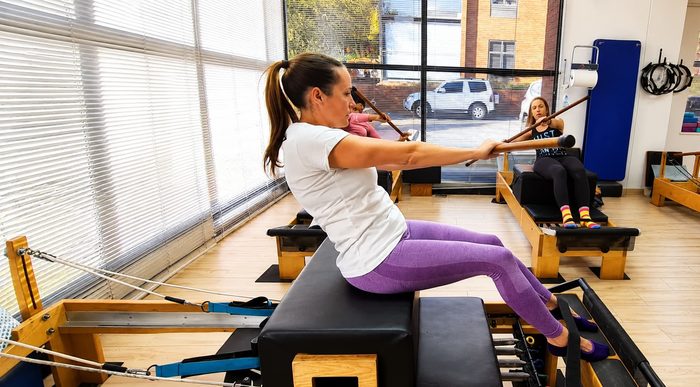
Pilates is not a replacement for cardio, but it works very well alongside it, and it makes you a better runner, cyclist or swimmer by strengthening your core and improving your form. You can also choose Pilates-based classes that raise your heart rate, for example:
- Reformer classes using the jump board
- Mat classes with rebounding on mini trampolines
- Barre classes
- TRX classes
Mixing these with your usual mat or reformer sessions means you burn energy in different ways and stay interested. Although every class is a full-body workout, Pilates puts particular focus on the core and waistline, so you get the toning benefits as well.
How often to do Pilates for weight loss, and what to eat
Aim for two to three sessions a week
Two to three Pilates sessions a week is a good starting point and the level at which most people begin to see results. As with any programme, consistency matters more than intensity. If you can add more sessions over time, you will use more energy each week.
Mix your classes
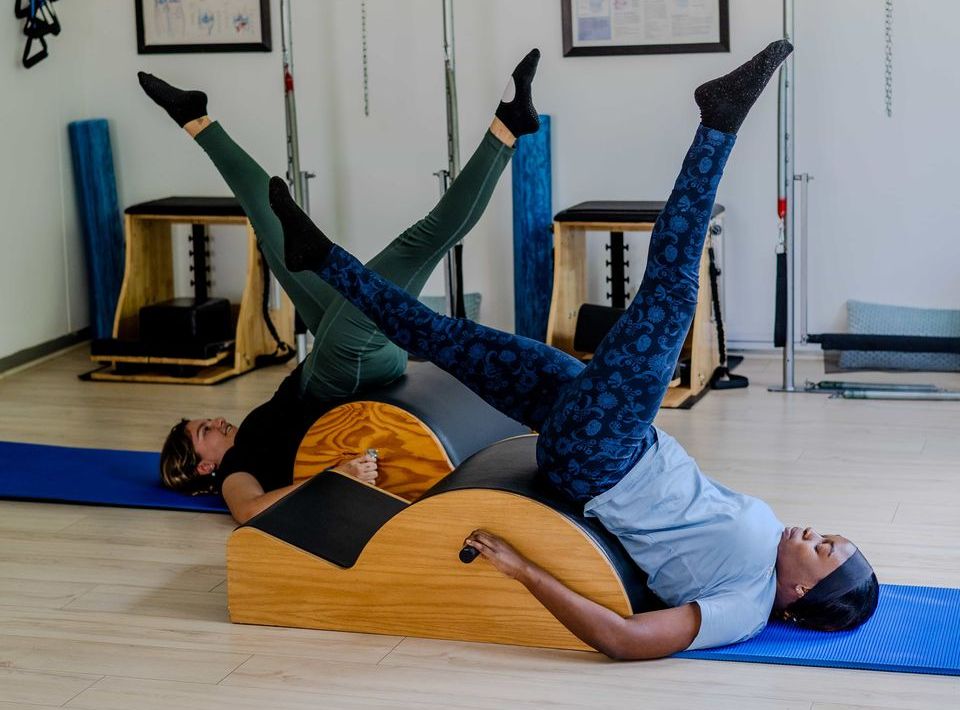
Try to vary your classes. For example, combine a mat or barre class with a large equipment class on the reformer, tower or Wunda chair. You will work your muscles in different ways and avoid getting bored. Our monthly subscriptions let you mix class types; see our current class prices for the options. For more on finding the right routine, read how often you should do Pilates.
Diet matters as much as exercise
What you eat, and how much, has a big influence on weight loss. No exercise programme can out-train a diet that doesn’t support your goals. A balanced diet with sensible portions, alongside regular Pilates and some cardio, will give you far better results than any one of these on its own. If you have specific health concerns or a lot of weight to lose, it is worth speaking to your doctor or a registered dietitian as well.
Frequently asked questions
Can Pilates alone help me lose weight?
It can contribute, especially if you are currently inactive, but you will see better and faster results by combining Pilates with healthy eating and some cardio.
Is reformer or mat Pilates better for weight loss?
Both work. Reformer classes add spring resistance, which many people find more challenging, while mat classes with small equipment and rebounding can raise your heart rate. A mix of the two is ideal.
How long before I see results?
It varies from person to person. Many clients notice they feel stronger and stand taller within a few weeks of regular classes; visible changes in tone usually follow with consistency.
Start your Pilates routine
If you are new to Pilates Dynamics, your first step is a 55-minute beginner assessment, which includes a posture analysis and an orientation to the basics before you join a small group class. You can also view the class timetable or call us on 011 792 5459 or 072 999 2229 (WhatsApp), or email info@pilatesdynamics.co.za.