Why is reformer Pilates so popular?
Why is reformer Pilates popular? Low impact, full-body work and springs that adapt to every level. See what the reformer does and how to start safely.

Reformer Pilates is popular because it gives you a low-impact, full-body workout that builds strength, flexibility and core stability, and it can be adjusted for almost any age or fitness level. So, why is reformer Pilates popular right now in particular? The machine’s springs let your instructor make each exercise harder or easier in seconds, which means a beginner, an athlete and someone coming back from an injury can all get a genuinely useful session. Add the variety of moves, the cardio option of the jump board and the focus on good posture, and it is easy to see why reformer classes fill up first at most studios.

What makes the Pilates reformer different?
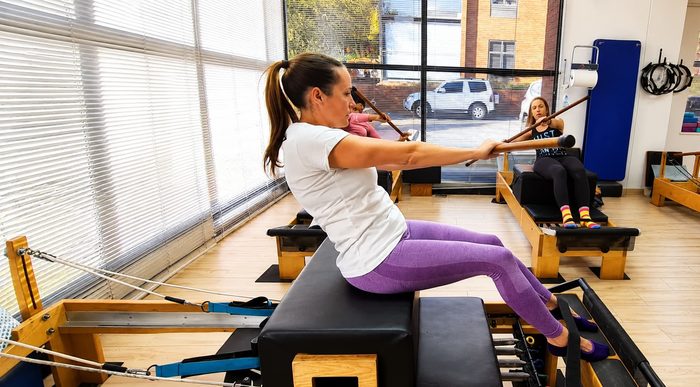
The reformer is a frame with a padded, sliding carriage attached to a set of springs. You push or pull the carriage with your legs or arms, using the foot bar or long straps and handles. You can work lying on your back, front or side, seated, kneeling or standing, so the range of exercises is huge.
The springs are the clever part. Depending on the exercise, they either challenge you by adding resistance, or support you by taking some of the load. Because the carriage moves, your body has to stay organised and controlled throughout every movement, which keeps the deep stabilising muscles switched on. Many reformers also take a jump board, which adds light, low-impact jumping for cardio, power and speed.
Why is reformer Pilates popular? The main reasons
Low impact, high effectiveness
Many exercises are done lying down or seated, so there is very little load on the joints. That makes the reformer a good choice for injury prevention and, with the right guidance, for rehabilitation, while still giving you a hard workout.
A genuine full-body workout
Almost every reformer exercise uses several muscle groups at once. You work the deep core alongside the hips, glutes, legs, back, arms and shoulders, which helps build a balanced, evenly strong body rather than one or two over-developed areas.
Strength, flexibility and mobility together
Controlled movement against spring resistance builds strength while the muscles lengthen through their full range. Over time, many clients find they feel stronger, move more freely and stand taller.
Adjustable for every level
Changing a spring, the angle or the position changes the exercise. That is why the same machine suits beginners, dancers, athletes, older adults and people working around old injuries.
Functional movement and body awareness
Reformer work trains the movement patterns you use every day: pushing, pulling, rotating, balancing and stabilising. Better control and body awareness carry over into posture, sport and daily life. As one of our clients put it: “I used to do strength training, but I have swopped it for Pilates Reformer training. Honestly, it changes your workout perspective.”
It never gets boring
Pilates is often called a 360-degree form of exercise. Classes can combine squats, lunges, strength, flexibility, mobility and cardio, and the reformer can be paired with small equipment such as balls, bands, rings, weights and the jump board. For more on what it does for your body, read about the benefits of reformer Pilates.
Who can do reformer Pilates?
Pilates is not a fad, and it is not only for one body type. Professional athletes use it for cross-training, it is widely used in rehabilitation, and it can be modified for young and older adults alike. Men benefit just as much as women.
If you have an injury, a medical condition or are pregnant, check with your doctor or physio first. Our biokineticist, Aurelie, works alongside our instructors, so your programme can take your history into account.
Are there any downsides to reformer Pilates?
The main risk is doing it without proper guidance. Some reformer exercises need careful attention to form and posture, and joining a group class you are not ready for can aggravate an existing injury. That is why new clients at Pilates Dynamics start with a beginner assessment: a 55-minute session with posture analysis and an orientation to the equipment, so your instructor can recommend the right class for your level.
Reformers are also expensive, precise machines that need regular maintenance, which is why reformer classes usually cost more than mat classes. For most people, the variety and the close supervision in a small group make it worth it.

Teaching reformer Pilates
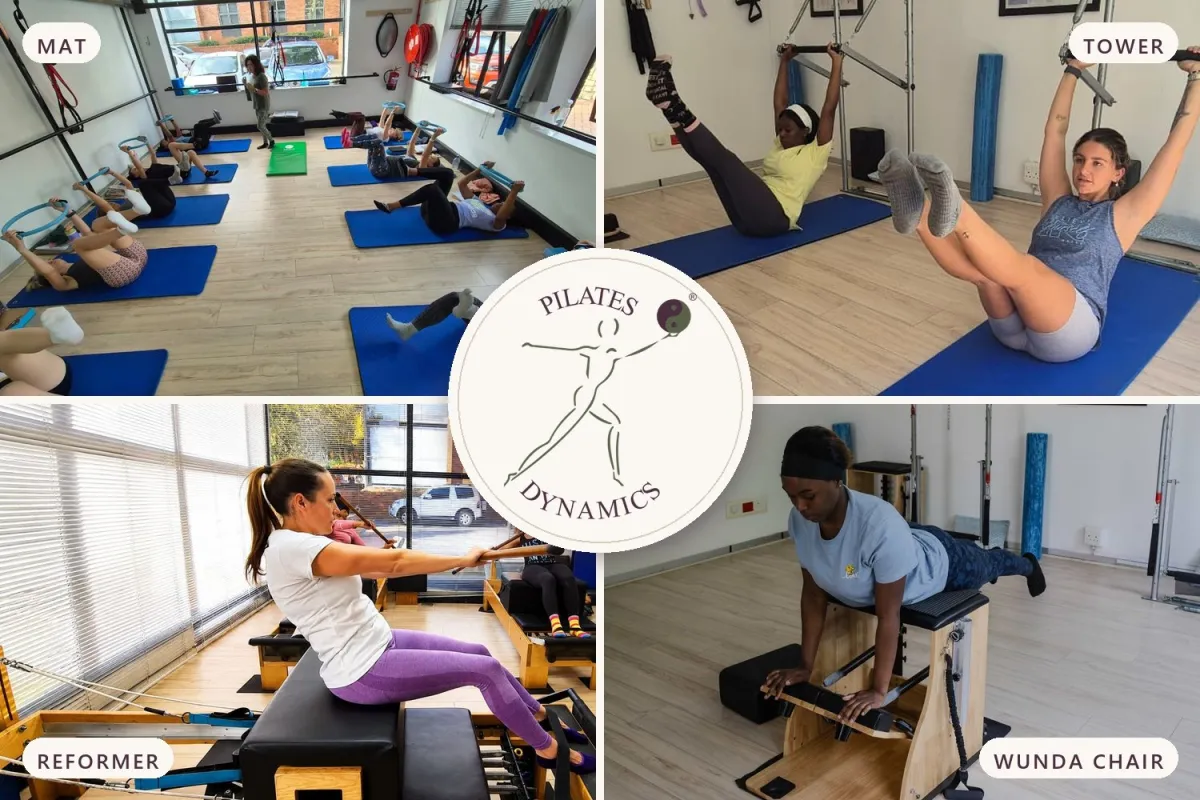
Because reformer classes are in such demand, instructors with a reformer qualification are sought after, and many studios now teach mainly on large equipment such as the reformer, tower and Wunda chair. If you are a mat-qualified instructor, adding a reformer qualification keeps you current. Pilates Dynamics has trained instructors for 19 years; see our Intensive Reformer course or the Comprehensive course, which covers all the machines.
Frequently asked questions
Is reformer Pilates better than mat Pilates?
Neither is better for everyone. Mat work builds control using your own body weight, while the reformer adds adjustable resistance and support. Many clients do both. Compare them in reformer Pilates vs mat Pilates.
Is reformer Pilates suitable for beginners?
Yes, as long as you start with guidance. The springs can make exercises easier as well as harder, and a beginner assessment means you join a group that matches your level.
Why is reformer Pilates popular with athletes?
It strengthens the muscles that repetitive sports tend to neglect, improves mobility and balance, and adds training variety without heavy impact on the joints.
Try reformer Pilates at Pilates Dynamics
Ready to see what the fuss is about? Book your beginner assessment, then have a look at our class prices and timetable. You can also call 011 792 5459, WhatsApp 072 999 2229 or email info@pilatesdynamics.co.za.