Your free Pilates assessment: why every new client starts here
Every new client at Pilates Dynamics starts with a free, private Pilates assessment. Here is what happens in that hour, and why it makes such a difference.

If you are new to Pilates Dynamics, your Pilates journey does not start in a group class. It starts with a free Pilates assessment: a private, one-on-one session of about 55 minutes to an hour with one of our instructors at our studio in Randburg, Johannesburg.
Every new client starts here, whether you have never set foot in a Pilates studio or you have been doing Pilates for years somewhere else. It is the most useful hour you will spend with us, and this guide explains exactly what happens in your free assessment and why it matters so much.
Your free Pilates assessment at a glance
- Who it is for: every new client, complete beginners and experienced clients alike.
- What it costs: nothing. Your first assessment is free.
- How long it takes: about 55 minutes to an hour.
- What kind of session it is: a private, one-on-one session with an instructor, separate from our group classes.
- How to book: contact the studio and we will book a private session at a time that suits you. Call 011 792 5459, WhatsApp 072 999 2229, email info@pilatesdynamics.co.za or send us a message.
Why every new client starts with a free Pilates assessment
Classical Pilates is a precise method. Joseph Pilates called it Contrology for a reason: every exercise is about control, alignment and working the right muscles, not about doing as many repetitions as possible. Done well, Pilates builds deep strength, better posture and a body that moves freely. Done with poor form, it becomes just another workout, and in some cases it can aggravate an old injury.
Our studio is also fully equipped. Alongside mat work, our classes use Reformers, Towers, Wunda Chairs and barrels. These are spring-loaded machines, and they behave very differently from a gym machine or a yoga mat. Walking into a group class without knowing how to set them up, get on and off safely, or what your instructor means by “two red springs” or “press out to straight legs” is stressful. You end up watching other people instead of feeling the work in your own body.
A free Pilates assessment solves all of this before your first class. You learn the basics with an instructor’s full attention, and you arrive in class confident, safe and ready to see real results.
What happens in your free Pilates assessment
Every assessment is shaped around you, but it usually covers six things.
1. Learning the Pilates equipment properly
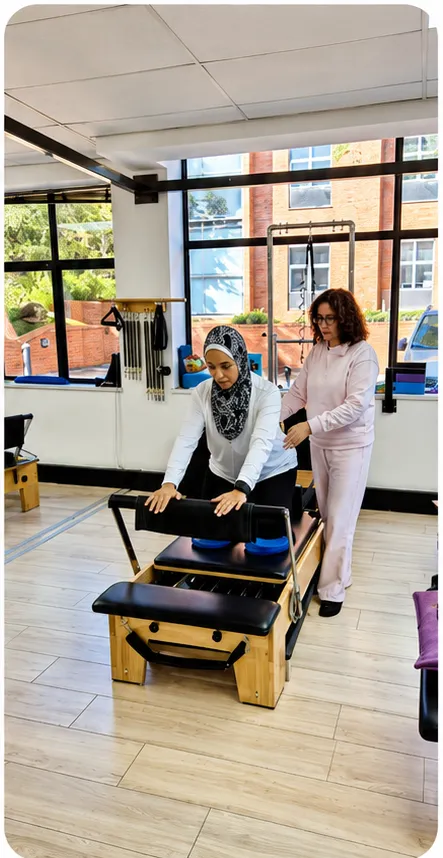
A big part of your assessment is a hands-on introduction to the apparatus you will use in class. Your instructor shows you how each piece works, how to adjust it for your body, and how to move on and off it safely.
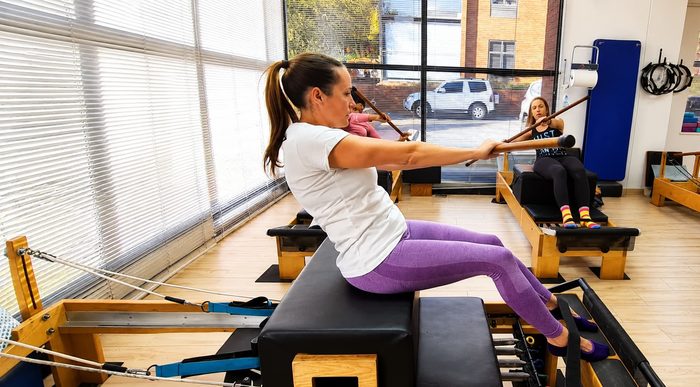
The Reformer. The best-known Pilates machine: a sliding carriage connected to springs, with a footbar, straps and a headrest. You learn how the springs change the resistance (and why heavier is not always harder), how to set the footbar and headrest, how to hold the straps, and how to keep the carriage controlled instead of letting it snap back. Read more in our guide to the Pilates Reformer machine.
The Tower. Mounted on the wall, the Tower uses springs from above and a push-through bar. It is wonderful for spinal mobility, stretching and building strength in the arms, legs and back, and it gives your body feedback about your alignment as you move.
The Wunda Chair. Small but powerful. The Wunda Chair has a spring-loaded pedal and challenges your balance, stability and strength in a way that quickly shows which side of your body works harder. It is very effective, which is exactly why it needs a proper introduction.
The barrels. Our barrels support your spine as you stretch, extend and strengthen. They are excellent for opening the chest and hips and improving posture, especially if you sit at a desk all day.
You will not do a full workout on every piece in one session. The aim is that nothing in your first group class feels unfamiliar. For a closer look, see Reformer, Tower and Wunda Chair classes explained.
2. Proper form from day one
In Pilates, how you do an exercise matters far more than how many you do. Your instructor uses the assessment to teach you the fundamentals that every class builds on:
- Breathing. How to breathe into the back and sides of your ribs, and how to time your breath with the movement.
- Your centre. How to find and switch on your deep abdominal and pelvic floor muscles (the “powerhouse”) without gripping or holding your breath.
- Spine and pelvis position. What neutral spine and imprinted spine feel like, and when each one is used. Our article on neutral spine vs imprinted spine explains the difference.
- Shoulders and neck. How to keep your shoulders stable and your neck relaxed, so the work goes where it should.
- Alignment. How to line up your feet, knees and hips, which protects your joints and makes each exercise more effective.
Learning these properly at the start is much easier than unlearning bad habits later. It is also why clients who start with an assessment tend to feel results sooner. Read more about proper form and posture in exercise.
3. Your health history and any injuries
Before you move, your instructor talks through your history: past and current injuries, surgeries, back or neck pain, joint problems, pregnancy or a recent birth, and any medical conditions. This is not a formality. It decides which exercises are right for you, which ones need to be modified, and which ones to avoid for now.
If you are recovering from an injury, managing a condition or have been referred by a doctor or physiotherapist, please tell us when you book. A biokineticist works alongside our instructors when extra care is needed. If you are unsure whether Pilates is right for you at the moment, check with your doctor first.
4. A look at your posture and how you move
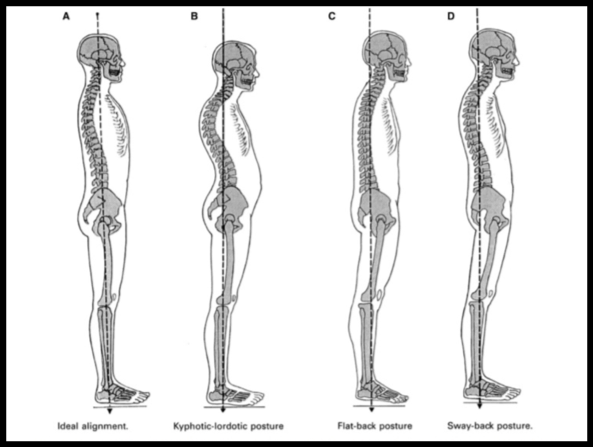
Your posture says a lot about the natural state of your muscles and joints. During the assessment your instructor looks at how you stand, balance and move, and notes areas that are tight, weak or working harder than they should. Perhaps one shoulder sits higher, your pelvis tilts forward, or one leg takes more of the load.
None of this is about judging your body. It simply gives your instructor a starting point, so your programme corrects imbalances instead of reinforcing them. Balance is one of the core principles of Pilates, and balanced muscles around every joint are key to moving well for life.
5. Your goals
People come to Pilates for very different reasons: a stronger core, a healthier back, better posture, toning, flexibility, support for running, golf or other sport, recovery after a baby, or simply feeling better in their body as they get older. Your instructor asks what you want from Pilates, so that your classes and advice match what matters to you.
6. Choosing the right Pilates classes for you
At the end of your free assessment, your instructor recommends your next step. That might be:
- Joining a group class straight away. Our groups are small (a maximum of eight people), so your instructor can still watch your form and offer corrections.
- A few private sessions first, if you have an injury or a specific condition, or would like more one-on-one time before joining a group.
- The right type of class: mat classes with small equipment, equipment classes on the Reformer, Tower and Wunda Chair, or stretch classes. Not sure which suits you? Our article on Reformer vs mat Pilates is a good place to start.
- How often to come. Most people get the best results from two to three sessions a week, but your instructor will suggest what is realistic for you.
You can see all our group classes on the class timetable and current fees on our pricing page.
Already done Pilates elsewhere?
We still ask you to start with a free assessment, and experienced clients often tell us they are glad they did. Studios differ in their equipment, spring settings, terminology and style. We teach the classical method, and your assessment lets us see where you are, place you in the right class, and make sure you get the most from our equipment from your very first session.
What to wear and bring
- Comfortable, well-fitted exercise clothing (not baggy), so your instructor can see your alignment.
- Non-slip socks. Pilates is done in socks, and grip socks are best on the equipment.
- A small towel and a bottle of water.
Arrive a few minutes early to park and settle in. Our studio is in Stonemill Office Park, Darrenwood, Randburg, with safe, secure parking. For more on how your first visit feels, read what to expect at your first Pilates session.
How to book your free Pilates assessment
Your free assessment is booked directly with the studio as a private session. Get in touch with a few days and times that suit you, and we will confirm your session:
- Call: 011 792 5459
- WhatsApp: 072 999 2229
- Email: info@pilatesdynamics.co.za
- Online: send us a message
Let us know about any injuries or conditions when you book, so your instructor can prepare. You can also read more on our beginner assessment page.
Free Pilates assessment FAQs
Is the first Pilates assessment really free?
Yes. Your first assessment at Pilates Dynamics is free.
How long does the free assessment take?
About 55 minutes to an hour.
Do I have to do an assessment before joining a class?
Yes. Every new client starts with a private assessment before joining group classes. It keeps you safe and helps you get far more out of your classes.
I have done Pilates before. Do I still need an assessment?
Yes. Studios, equipment and teaching styles differ, and the assessment lets us place you in the right class.
I have an injury. Can I still do Pilates?
In many cases, yes. Pilates is often used to support recovery, but tell us about your injury when you book and check with your doctor or physiotherapist if you are unsure. Your instructor will adapt the exercises, or recommend private sessions first.
Do I need to be fit or flexible?
Not at all. The assessment meets you where you are, and every exercise can be adjusted to your level.
How do I book my free Pilates assessment?
Contact the studio on 011 792 5459, WhatsApp 072 999 2229, email info@pilatesdynamics.co.za or send a message through our website, and we will book a private session at a time that suits you.
What happens after the assessment?
Your instructor recommends the classes that suit you, whether that is a group class straight away or a few private sessions first, and how often to come.
Start with one free hour
The best Pilates results come from a good start. One free, private hour with an instructor teaches you the equipment, gives you proper form from day one, takes your body and history into account, and puts you in the right class. Contact the studio to book your free Pilates assessment today.